

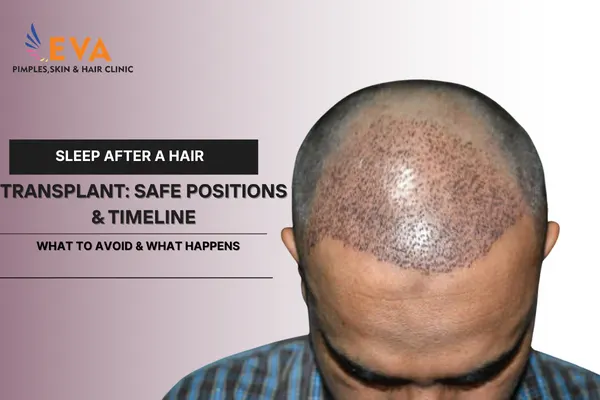

Sleep After a Hair Transplant: Safe Positions & Timeline
Home | Blogs | Sleep After a Hair Transplant: Safe Positions & Timeline

Recovering from a hair transplant is not just about the procedure—it’s also about how well you follow aftercare instructions. One of the most overlooked yet critical aspects is how you sleep. The way you rest in the first few days can directly affect graft survival and healing.
Understanding the right approach to Sleep After a Hair Transplant can help you avoid complications, protect newly implanted follicles, and ensure better long-term results. At Eva Pimple Skin & Hair Clinic, patients are guided with detailed aftercare routines to make recovery smooth and stress-free.
Key Topics Discussed in This Article
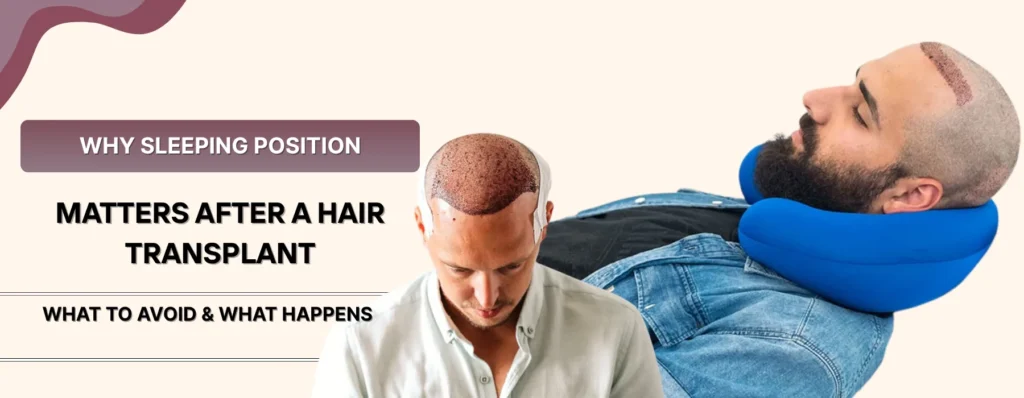
- Why Sleeping Position Matters After a Hair Transplant
- The Best Way to Sleep After a Hair Transplant (First 7–10 Days)
- When Can You Sleep on Your Side After a Hair Transplant?
- When Can You Sleep Normally Again?
- What Happens If You Accidentally Sleep Wrong?
- Role of Eva Pimples Skin & Hair Clinic Sleep After a Hair Transplant: Safe Positions & Timeline
Why Sleeping Position Matters After a Hair Transplant
After a transplant, the newly implanted grafts are extremely delicate. Even slight pressure, friction, or accidental rubbing against pillows can dislodge them.
That’s why maintaining the correct Sleep After a Hair Transplant position is essential. A proper sleeping posture reduces swelling, prevents infection, and ensures that grafts remain intact during the initial healing phase.
Patients undergoing Hair Transplant Surgery in Pune are often advised to be extra cautious during the first few nights, as this is when the grafts are most vulnerable.
The Best Way to Sleep After a Hair Transplant (First 7–10 Days)
The first week is the most critical period. During this time, your goal should be to protect the transplanted area at all costs.
Recommended Sleeping Position:
- Sleep on your back
- Keep your head elevated at a 30–45 degree angle
- Use 2–3 pillows or a neck pillow for support
Sleeping in this position helps reduce swelling and avoids direct contact with the transplanted area. It also supports proper sleeping after hair transplant surgery recovery.
Some patients find it helpful to sleep in a recliner chair for the first few nights to maintain the correct posture without turning.
When Can You Sleep on Your Side After a Hair Transplant?
Most patients can return to their normal sleeping habits after 2 weeks. By this time:
- Grafts are fully secure
- Scabs have fallen off
- The risk of dislodging follicles is minimal
However, even after resuming normal sleep, it’s advisable to avoid harsh pressure on the scalp. Patients who undergo Hair Transplant in Pune are often guided to ease back into their routine rather than rushing the process.
What Happens If You Accidentally Sleep Wrong?
It’s common to worry about accidental movements during sleep. If you unknowingly sleep in the wrong position, don’t panic.
In most cases:
- Minor contact does not cause serious damage
- Grafts are stronger after the first few days
- No immediate loss is usually noticeable
However, repeated pressure or rubbing can affect results. That’s why maintaining the correct Sleep After a Hair Transplant routine is important, especially in the early days.
What to Avoid While Sleeping After a Hair Transplant
To ensure proper healing, avoid the following:
- Sleeping on your stomach
- Direct contact between grafts and pillow
- Using rough pillow covers
- Tossing and turning excessively
- Sleeping without head elevation in early days
Avoiding these habits supports better sleeping after hair transplant surgery outcomes and protects your investment in the procedure.
Supporting Healing Beyond Sleeping Position
While sleeping posture is important, overall care also plays a big role in recovery.
Additional Tips:
- Follow prescribed medications
- Keep your scalp clean as advised
- Avoid alcohol and smoking during recovery
- Stay hydrated and maintain a healthy diet
A holistic approach ensures that your Sleep After a Hair Transplant routine works effectively alongside other aftercare steps.
Role of Eva Pimples Skin & Hair Clinic Sleep After a Hair Transplant: Safe Positions & Timeline
Recovery after a hair transplant requires patience and care. Something as simple as your sleeping position can have a significant impact on your results.
By following the correct guidelines for Sleep After a Hair Transplant, you can protect your grafts, reduce complications, and ensure a smoother healing process.
At Eva Pimple Skin & Hair Clinic, expert care and personalized guidance help patients achieve natural-looking, long-lasting results—starting from the first night of recovery.