
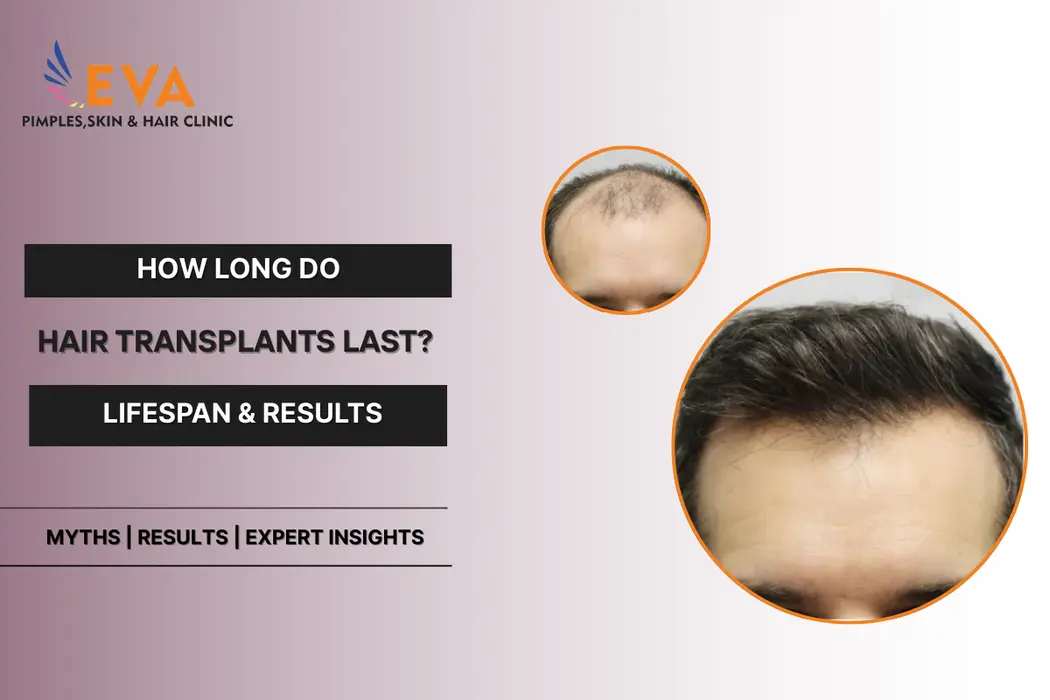

How Long Do Hair Transplants Last? Lifespan, Results
Home | Blogs | How Long Do Hair Transplants Last? Lifespan, Results

A hair transplant is one of the most effective and long-term solutions for hair loss. But before undergoing the procedure, almost every patient has the same question:
“How long do hair transplants last?”
Understanding the lifespan, expected results, and long-term maintenance helps you make the right decision and set realistic expectations. The good news is that modern hair transplants—especially when done by experienced dermatologists—can last a lifetime.
At Eva Pimples Skin & Hair Clinic, the best hair transplant clinic in Pune, experts use advanced techniques like FUE and DHI to ensure long-lasting, natural-looking results. This guide breaks down how long hair transplants last, why transplanted follicles are permanent, and what you can expect years after the procedure.

Key Topics Discussed in This Article
- Do Hair Transplants Really Last a Lifetime?
- Why Transplanted Hair Is Permanent
- What Results Can You Expect Over Time?
- Factors That Influence How Long Hair Transplants Last
- How to Make Your Hair Transplant Last Longer
- Why Choose Eva Pimples Skin & Hair Clinic for Hair Transplant in Pune?
- Frequently Asked Questions
Do Hair Transplants Really Last a Lifetime?
Yes—hair transplants can last for life.
This is because the hair follicles used during the procedure are taken from the donor zone, typically the back and sides of the scalp. These areas are genetically resistant to balding.
This genetic resistance remains even after transplantation. That means once these follicles are implanted into the thinning area, they continue to grow naturally for many years—often permanently.
Patients who get their transplants done at Eva Pimples Skin & Hair Clinic often enjoy results that last decades, thanks to high graft survival rates and precise implantation techniques.
Why Transplanted Hair Is Permanent
To understand the lifespan of a hair transplant, you must understand the science behind donor dominance.
1. Donor Hair Is Genetically Strong
Donor follicles are programmed not to fall out due to male pattern baldness (androgenetic alopecia). This genetic trait stays intact even after they are moved.
2. Follicles Grow Naturally
Transplanted hair grows in natural cycles—anagen (growth), catagen (transition), and telogen (rest).
3. Grafts Are Securely Rooted
Once implanted properly, the follicles establish a blood supply in the recipient area and become permanent.
4. Modern Techniques Improve Lifespan
Eva Clinic uses advanced extraction tools, sapphire blades, and high-precision implantation that support long-term graft survival.
What Results Can You Expect Over Time?
Here is how your transplanted hair develops month by month:
1–3 Months:
Shedding is normal. Follicles enter the rest phase.
4–6 Months:
New hair begins to grow—soft, thin, and light.
6–12 Months:
Hair becomes denser, thicker, and stronger.
12–18 Months:
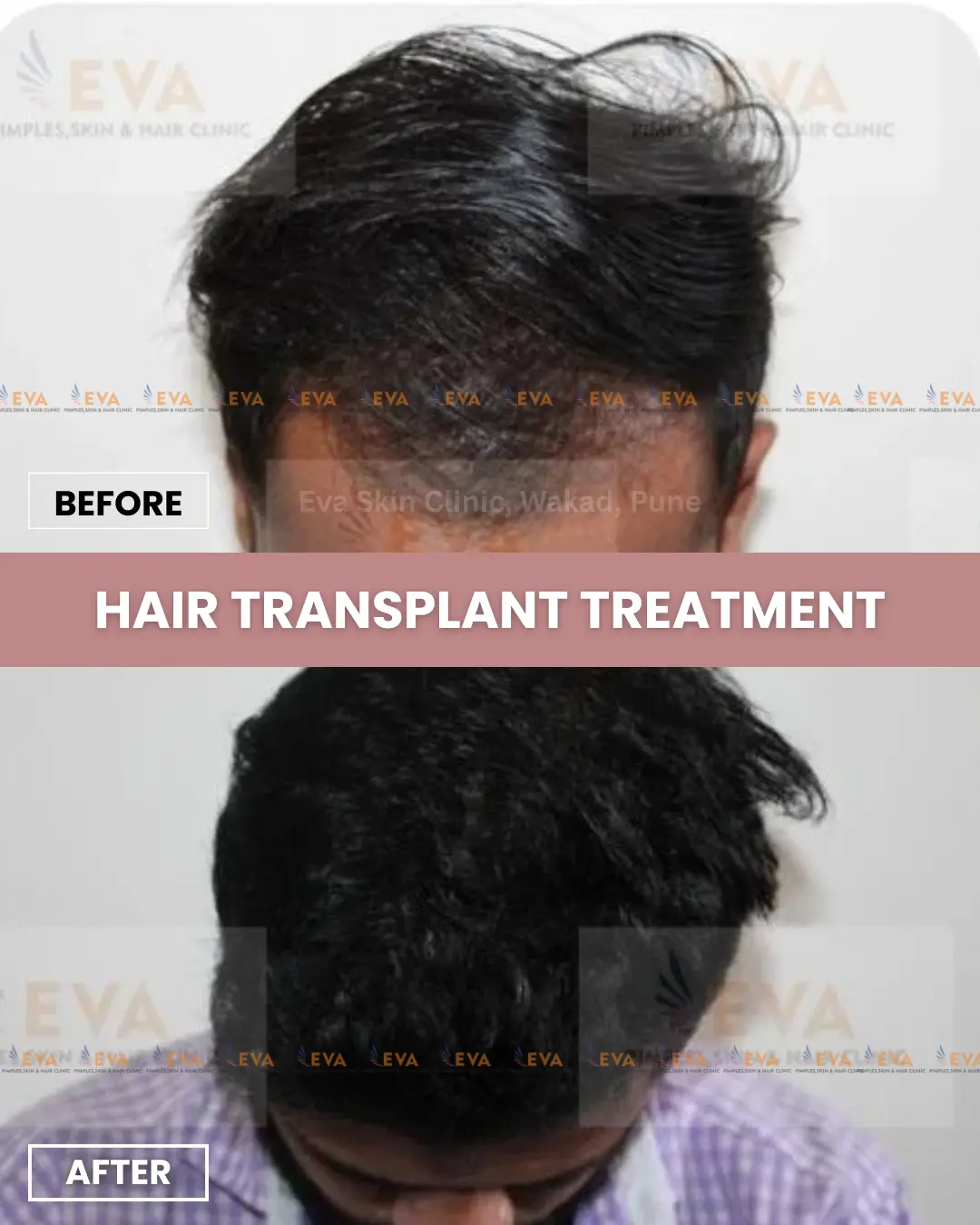
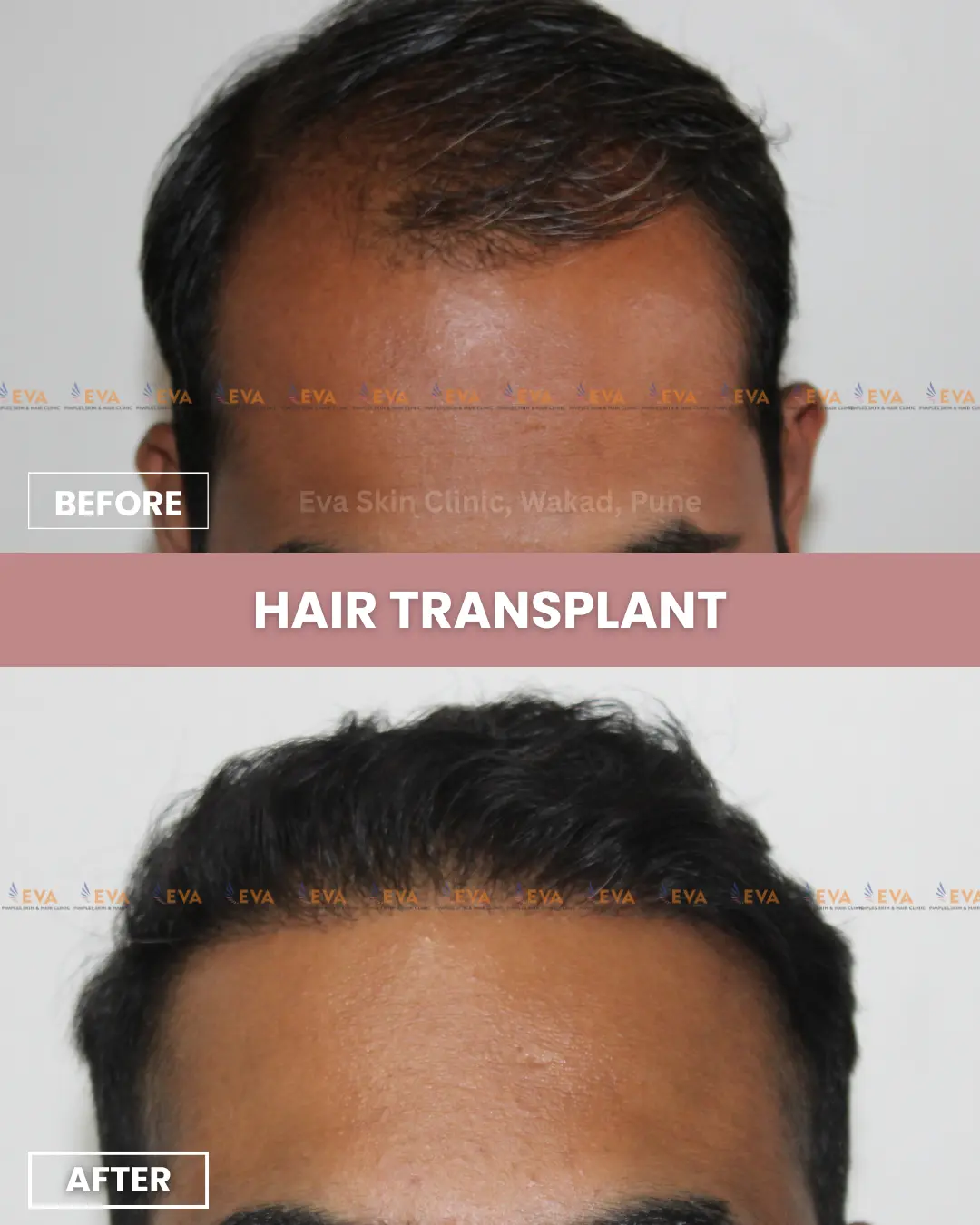
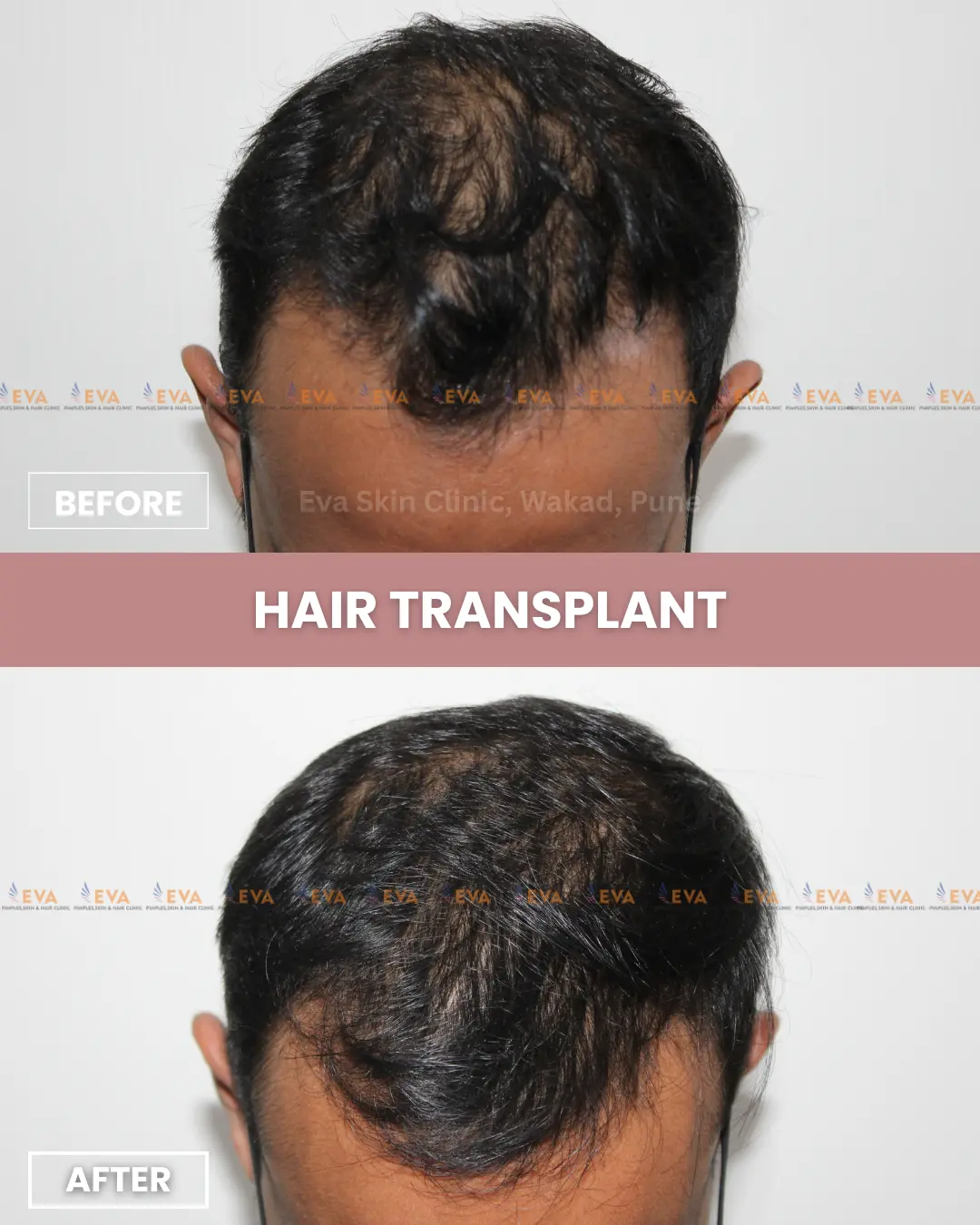
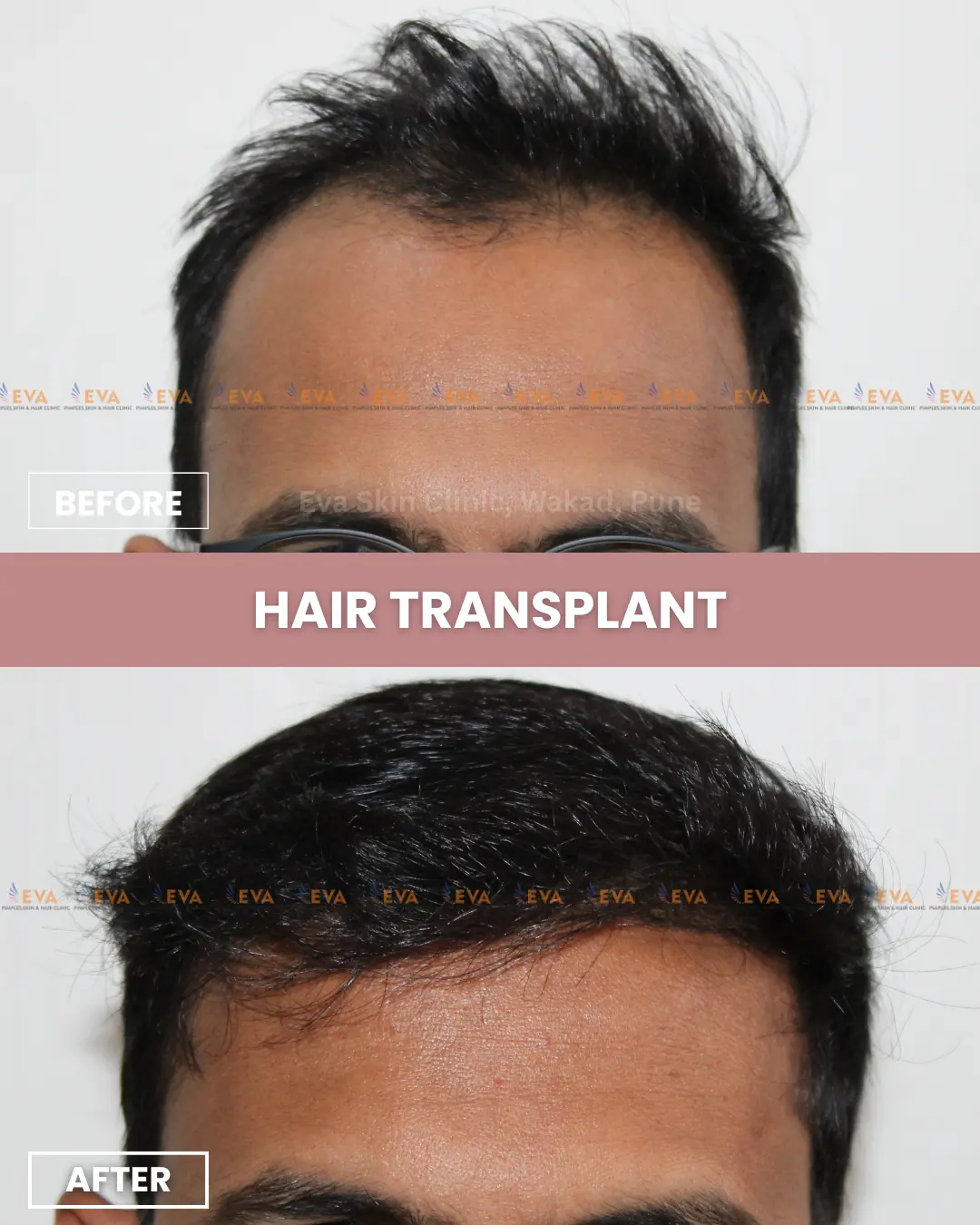
Final results appear. Density improves, and the hairline looks completely natural.
Patients at Eva Pimples Skin & Hair Clinic often experience noticeable transformation within 6 months and full results by 12 months.
Factors That Influence How Long Hair Transplants Last
While transplanted hair is permanent, several factors influence the quality and longevity of results:
1. Quality of Donor Hair
Thicker, healthier follicles provide better coverage and long-term stability.
2. Surgical Expertise
The skill of the dermatologist plays a major role.
At Eva Pimples Skin & Hair Clinic, dermatologists ensure:
- Precise extraction
- Minimal follicle damage
- Correct graft angling
- High graft survival
3. Technique Used (FUE, FUT, DHI)
Minimally invasive hair transplant techniques like FUE and DHI increase longevity and naturalness.
4. Aftercare
Following post-surgery instructions affects long-term success.
5. Progression of Natural Hair Loss
While transplanted hair is permanent, non-transplanted hair may continue to thin with age. That’s why proper medical management is crucial.
Will You Need a Second Hair Transplant in the Future?
Not always. Many patients require only one hair transplant in their lifetime.
However, some individuals may benefit from a second session if:
- Their natural hair continues to thin
- They want more density
- They initially had limited donor hair
- They want to correct an older transplant done elsewhere
Eva Pimples Skin & Hair Clinic offers long-term support and maintenance plans to minimize additional procedures.
How to Make Your Hair Transplant Last Longer
A hair transplant gives you permanent follicles—but maintaining overall scalp health helps enhance long-term results.
Dermatologists at Eva Clinic recommend:
- PRP Therapy: Strengthens existing and transplanted follicles.
- Minoxidil & Finasteride (if needed): Helps stabilize non-transplanted hair.
- Healthy Hair Care Routine: Gentle shampoo, proper nourishment, and hydration.
- Avoid Smoking & Stress: Improves blood flow to transplanted follicles.
- Regular Follow-Ups: Ensures ongoing support and early intervention if needed.
When you follow these recommendations, your hair transplant stays thick, natural, and healthy for decades.
Why Choose Eva Pimples Skin & Hair Clinic for Hair Transplant in Pune?
Eva Pimples Skin & Hair Clinic is known for its high graft survival rate, natural hairline artistry, advanced technology, and exceptional patient care.
What Makes Eva Clinic the Best:
- Dermatologist-led surgery
- Latest FUE & DHI methods
- Minimal pain and downtime
- Natural-looking hairline creation
- Strict hygiene and sterilization
- Customized planning for each patient
- High-quality donor follicle preservation
- Long-term follow-up and support
Most importantly, Eva Clinic focuses on results that last—naturally and beautifully.
Patients who undergo transplantation at Eva Clinic consistently share positive experiences:
- “My transplanted hair is growing like my natural hair. I style it however I want.”
- “The density after 10 months is unbelievable. I look years younger.”
- “No pain, fast healing, and the results look completely natural.”
Many patients regain lost confidence, improve their appearance, and enjoy long-term satisfaction.