
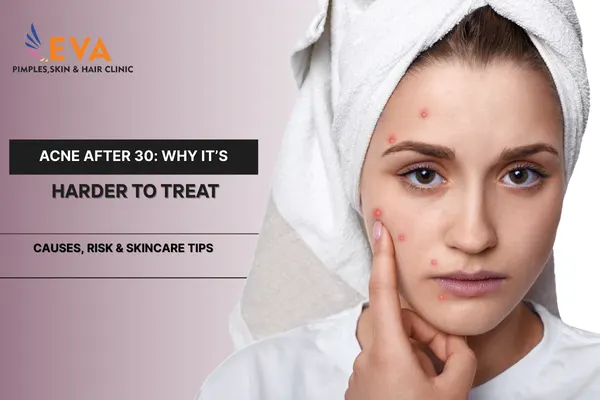

Acne After 30: Why It’s Harder to Treat
Home | Blogs | Acne After 30: Why It’s Harder to Treat

Acne After 30: Why It’s Harder to Treat is a concern many adults silently struggle with. You expect pimples in your teenage years, but breakouts in your 30s can feel frustrating and confusing. The skin behaves differently at this age, and treatment also becomes more complex.
At EVA PIMPLES SKIN & HAIR CLINIC, we often see patients who tried multiple home remedies without results. Adult acne needs a scientific and personalised approach. Let’s understand why acne after 30 is harder to treat and what you can do about it.
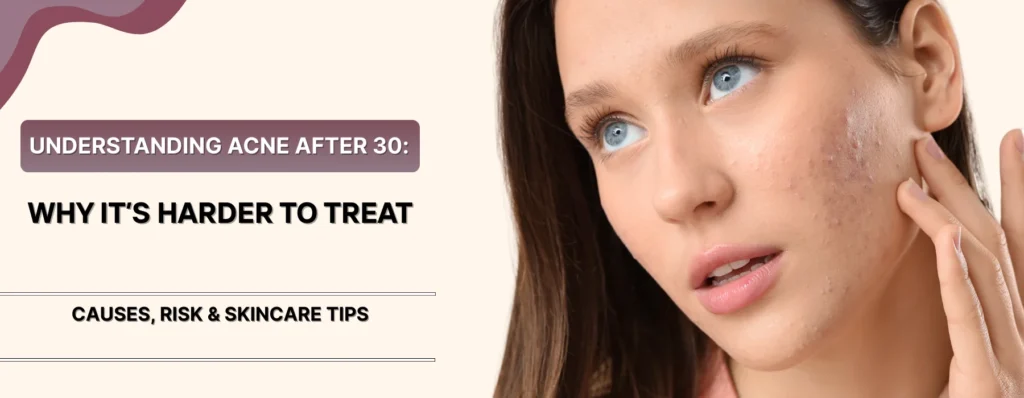
Key Topics Discussed in This Article
- Understanding Acne After 30: Why It’s Harder to Treat
- Acne After 30 Causes
- Acne After 30 Men: Is It Different?
- Acne at 30 Female: Why It’s Common
- Why Acne in 30s Treatment Needs a Professional Approach
- Role of Eva Pimples Skin & Hair Clinic Acne After 30: Why It’s Harder to Treat
Understanding Acne After 30: Why It’s Harder to Treat
In your 30s, your skin is not the same as it was at 18. Oil production, collagen levels, hormones, and healing ability all change. This is why Acne After 30: Why It’s Harder to Treat becomes a common question in dermatology clinics.
Here are the main reasons:
Hormonal fluctuations
Slower skin healing
Increased stress levels
Use of wrong skincare products
Underlying medical conditions like PCOS
Adult acne is often deeper, more painful, and more likely to leave scars.
Acne After 30 Causes
1. Hormonal Imbalance
Hormones play a major role in acne at 30 female patients. Women may experience breakouts due to:
PCOS
Thyroid imbalance
Pregnancy or postpartum changes
Stopping or starting birth control pills
Hormonal acne usually appears on the lower face, jawline, and chin.
2. Stress and Lifestyle
Stress increases cortisol levels. This triggers oil production and inflammation. Poor sleep and unhealthy diet add to the problem.
3. Slower Skin Cell Turnover
As we age, skin renewal slows down. Dead skin cells clog pores easily. This makes Acne After 30: Why It’s Harder to Treat compared to teenage acne.
4. Cosmetic and Skincare Mistakes
Using heavy makeup or anti-aging creams without medical advice can block pores. Many adults over-exfoliate their skin, which worsens inflammation.
Acne After 30 Men: Is It Different?
Yes, acne after 30 men can be slightly different.
Men usually have thicker skin.
Oil glands are more active due to testosterone.
Shaving can irritate the skin and spread bacteria.
Adult male acne often appears on the cheeks and beard area. Treatment requires proper cleansing routines and medical therapy.
Acne at 30 Female: Why It’s Common
Acne at 30 female patients is more common than in men. Hormones fluctuate throughout the month. Stress from work and family responsibilities also plays a role.
Women may also develop:
Cystic acne
Painful nodules
Post-inflammatory hyperpigmentation
These marks take longer to fade. This is another reason why Acne After 30: Why It’s Harder to Treat compared to teenage acne.
Why Acne in 30s Treatment Needs a Professional Approach
Teenage acne may respond to simple creams. But acne in 30s treatment often requires a combination approach.
Treatment Options May Include:
Prescription topical creams
Oral medications
Chemical peels
Laser therapy
Hormonal correction
Self-medication can delay healing and worsen scarring. Consulting a qualified dermatologist is important.
The Risk of Acne Scarring After 30
Adult skin heals slowly. Inflammation lasts longer. This increases the risk of permanent scars.
At EVA PIMPLES SKIN & HAIR CLINIC, we provide advanced Acne Scar Treatment in Pune for different types of scars:
Ice-pick scars
Boxcar scars
Rolling scars
Pigmented acne marks
Early treatment prevents long-term damage.
Advanced Acne Scar Treatment Options
1. Microneedling and RF Therapy
Stimulates collagen production. Improves skin texture.
2. Chemical Peels
Removes dead skin layers. Reduces pigmentation.
3. Laser Resurfacing
Effective for deep scars. Improves overall skin tone.
If you are searching for the Best Acne Scar Treatment in Pune, expert evaluation is essential. Each scar type needs a customised plan.
Professional Acne Scar Treatment not only improves appearance but also boosts confidence.
Skincare Tips for Acne After 30
To manage Acne After 30: Why It’s Harder to Treat, follow these simple steps:
Use a gentle, dermatologist-recommended cleanser
Avoid harsh scrubs
Apply non-comedogenic moisturiser
Use sunscreen daily
Manage stress through exercise or meditation
Avoid picking or squeezing pimples
Consistency is key. Quick fixes do not work in adult acne.
When Should You See a Dermatologist?
Consult a skin specialist if:
Acne is painful or cystic
Pimples leave dark marks or scars
Breakouts continue for months
Over-the-counter products fail
Professional care ensures safe and effective acne in 30s treatment.
Role of Eva Pimples Skin & Hair Clinic Acne After 30: Why It’s Harder to Treat
Acne After 30: Why It’s Harder to Treat is not just a cosmetic issue. It affects confidence and emotional well-being. Adult skin behaves differently and needs specialised care. Ignoring breakouts can lead to stubborn scars.
At EVA PIMPLES SKIN & HAIR CLINIC, we focus on root-cause diagnosis and customised treatment plans. Whether you need acne control or the Best Acne Scar Treatment in Pune, expert guidance makes all the difference.
If you are struggling with adult acne, book a consultation today and take the first step toward clear, healthy skin.