

Which Chemical Peel Is Best for Acne? Types, Benefits, Results
Home | Blogs | Which Chemical Peel Is Best for Acne? Types, Benefits, Results

Table of Contents
Introduction
If you have tried face washes, acne creams and home remedies but still struggle with clogged pores, blackheads, whiteheads or recurring pimples, you may have come across chemical peel treatment for acne.
But there is one important question: Which chemical peel is actually best for acne?
The answer is more nuanced than simply choosing the strongest acid.
A chemical peel is a controlled exfoliation treatment in which a carefully selected chemical solution is applied to the skin to remove damaged surface cells and encourage skin renewal. Depending on the formulation and depth, chemical peels may help address acne, excess oil, clogged pores, uneven texture and some post-acne discoloration.
At Eva Pimples Skin & Hair Clinic in Pune, the choice of peel should be based on the patient’s acne severity, skin type, pigmentation tendency, sensitivity and treatment goals rather than using the same peel for everyone.
For many patients with oily, congested and comedonal acne, a salicylic acid-based peel may be a useful option because salicylic acid is a beta-hydroxy acid that helps exfoliate and unclog pores.
But that does not mean salicylic acid is automatically the best choice for every patient.
Depending on the presentation, a dermatologist may consider glycolic acid, mandelic acid, Jessner-type or combination/modified peels. The appropriate concentration, formulation, contact time and treatment frequency are just as important as the name of the acid.
What Does a Chemical Peel Do for Acne?
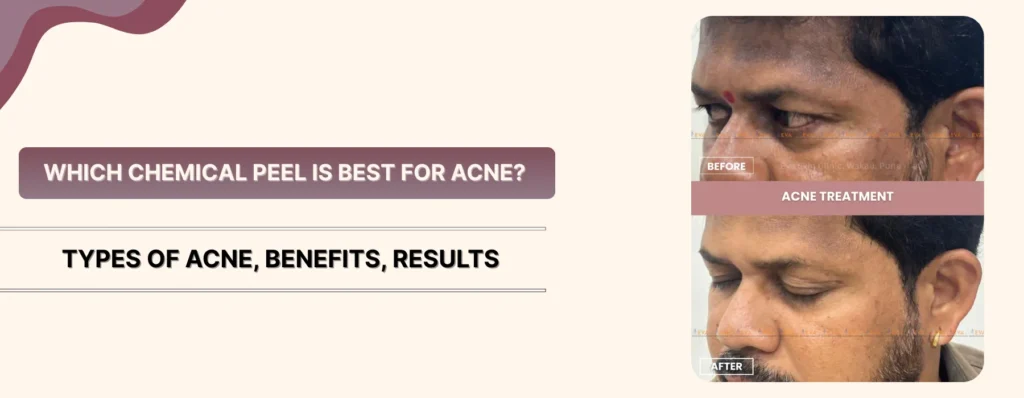
Acne develops through several interconnected processes, including follicular blockage, excess sebum, inflammation and changes in the skin microbiome.
A properly selected superficial chemical peel can help remove excess dead skin cells and reduce follicular congestion. The American Academy of Dermatology specifically notes that chemical peels can help remove dead skin cells and excess oil that contribute to clogged pores and acne.
Depending on the peel, treatment may help:
- Unclog pores
- Reduce blackheads and whiteheads
- Improve superficial acne
- Reduce excess surface oil
- Smooth rough skin texture
- Improve some post-acne pigmentation
- Give the skin a more even appearance
However, a chemical peel isn’t a universal replacement for medical acne treatment. The 2024 AAD acne guidelines strongly recommend evidence-based options such as topical retinoids, benzoyl peroxide and other medications for appropriate patients; the guideline also notes that evidence was insufficient to make a recommendation for procedures such as chemical peels as a standard acne treatment.
This is why a dermatologist should determine whether a peel is appropriate and whether it should be combined with other acne treatments.
Which Chemical Peel Is Best for Acne?
There isn’t one peel that wins for every acne patient. The ideal peel depends on what is causing the patient’s acne and what the treatment needs to accomplish.
Here are the commonly considered options.
1. Salicylic Acid Peel for Acne
When people ask about the best chemical peel for oily and acne-prone skin, salicylic acid is often one of the first ingredients discussed.
Salicylic acid is a beta-hydroxy acid with exfoliating and pore-clearing properties. Because it is oil-soluble, it can work particularly well for skin with excess sebum and clogged pores.
It may be considered for patients experiencing:
- Blackheads
- Whiteheads
- Oily skin
- Mild inflammatory acne
- Congested pores
- Acne-prone skin with excess sebum
The AAD also recognizes topical salicylic acid as an acne treatment that helps unclog pores and exfoliate the skin.
Potential advantage: It is particularly suited to congestion and comedonal acne.
Important: A salicylic acid peel is different from applying a strong salicylic acid product at home. Medical peels require appropriate formulation, concentration, application and aftercare.
2. Glycolic Acid Peel for Acne
Glycolic acid is an alpha-hydroxy acid that works primarily at the skin surface to loosen dead skin cells and promote exfoliation.
A dermatologist may consider a glycolic acid peel when acne is accompanied by:
- Dull skin
- Rough texture
- Mild congestion
- Post-acne discoloration
- Uneven skin tone
Because glycolic acid is primarily surface-exfoliating, it can be useful when the treatment objective extends beyond active acne to include texture and superficial pigmentation.
However, stronger does not automatically mean better. The strength and formulation need to be appropriate for the patient’s skin.
3. Mandelic Acid Peel for Acne-Prone or Sensitive Skin
Mandelic acid is another alpha-hydroxy acid that may be incorporated into acne-focused peel protocols.
Because mandelic acid has a larger molecular structure than glycolic acid, it penetrates the skin more slowly. Dermatologists may consider it when a more gradual exfoliating approach is appropriate.
It may be useful for patients concerned about:
- Mild acne
- Congested skin
- Uneven texture
- Post-acne marks
- Skin sensitivity
The important point is that “gentler” doesn’t mean universally suitable. A dermatologist still needs to assess your skin before selecting the peel.
4. Yellow Peel and Other Combination Peels
Sometimes, we use combination peels marketed under names such as Yellow Peel for specific acne, pigmentation or texture concerns.
Eva Clinic’s existing acne treatment information describes medical-grade peels including salicylic acid, glycolic acid and yellow peels as part of its acne treatment approach.
Whether a combination peel is suitable depends on the patient’s skin condition, pigmentation risk, current medications and treatment objective.
Chemical Peel Comparison for Acne
| Chemical Peel | May Be Considered For | Main Treatment Focus |
|---|---|---|
| Salicylic Acid | Oily, congested, comedonal acne | Pore exfoliation and oil-related congestion |
| Glycolic Acid | Acne with rough texture or superficial pigmentation | Surface exfoliation and texture |
| Mandelic Acid | Mild acne and patients needing a gentler approach | Gradual exfoliation |
What Is the Best Peel for Different Types of Acne?
The right question isn’t only “Which peel is strongest?” It’s “Which peel matches my acne?”
Blackheads and Whiteheads
Salicylic acid-based exfoliation may be particularly useful when clogged pores and excess oil are dominant concerns.
Mild Inflammatory Acne
A dermatologist may consider a superficial acne peel alongside a broader acne treatment plan.
Oily and Congested Skin
Salicylic acid is often considered because of its pore-clearing and exfoliating properties.
Acne With Post-Acne Marks
The treatment approach may need to address both acne and pigmentation. Depending on skin type, glycolic, mandelic, salicylic or combination protocols may be considered.
Severe Cystic or Nodular Acne
A chemical peel alone is generally not an adequate treatment strategy for severe, deep or painful acne. Such acne can scar and should be assessed by a dermatologist. The AAD notes that deeper, painful acne generally requires professional treatment rather than relying solely on over-the-counter products.
Chemical Peel vs Acne Creams: Which Is Better?
This isn’t necessarily an either-or decision.
Acne is a chronic inflammatory skin condition, and many patients benefit from a consistent medical treatment plan. Depending on the type and severity of acne, dermatologists may prescribe topical retinoids, benzoyl peroxide, azelaic acid, antibiotics or other therapies.
A chemical peel may be used as an adjunctive treatment in selected patients rather than replacing everyday acne management.
Think of it this way:
Daily medical skincare manages the acne cycle. A professional peel can provide targeted exfoliation and help address congestion and certain surface concerns.
Your dermatologist can determine whether combining these approaches makes sense for your skin.
Can Chemical Peels Remove Acne Scars?
This is where patients often misunderstand what a chemical peel can achieve.
Acne marks and acne scars are not the same thing.
Flat brown or dark marks left after acne are usually pigmentation rather than structural scars. These may respond to pigmentation-focused skincare and selected peel treatments.
True acne scars—such as ice-pick, rolling and boxcar scars—involve changes in the skin’s structure. A superficial chemical peel generally cannot completely correct deeper depressed scars.
Depending on scar type, dermatologists may consider treatments such as microneedling, subcision, fractional laser or combination approaches.
Eva Clinic’s acne scar treatment page currently lists fractional CO₂ laser, microneedling with PRP and subcision among its approaches to acne scarring.
How Many Chemical Peel Sessions Are Needed for Acne?
There is no fixed number of sessions that applies to everyone.
The treatment plan depends on:
- Acne severity
- Type of acne
- Skin sensitivity
- Pigmentation tendency
- Type and concentration of peel
- Response to previous treatment
- Other acne medications being used
Superficial peels may be repeated at intervals determined by the treating dermatologist. DermNet notes that superficial peels can sometimes be repeated every few weeks, while deeper peels require substantially longer recovery periods.
Is Chemical Peel Safe for Indian Skin?
Indian skin can be more prone to post-inflammatory hyperpigmentation, particularly following inflammation or irritation. That does not mean chemical peels are unsuitable for Indian skin, but it does mean that peel selection, concentration, skin preparation, technique and sun protection matter.
DermNet notes that people with darker Fitzpatrick skin types have a higher risk of pigmentary changes and recommends caution with chemical peels.
A dermatologist should therefore evaluate your skin tone and pigmentation history before deciding which peel is appropriate.
Chemical Peel for Acne: Benefits and Limitations
Potential Benefits of Chemical Peel for Acne
When appropriately selected, chemical peels may help improve:
- Acne congestion: Exfoliation can help remove dead skin cells and excess oil that contribute to blocked pores.
- Oily skin: Certain peel formulations can help manage surface oil and congestion.
- Texture: Controlled exfoliation can make rough, uneven skin feel smoother.
- Post-acne discoloration: Selected peels may be incorporated into treatment plans for superficial pigmentation.
- Overall skin appearance: Skin can appear fresher and more even after appropriate treatment.
What Chemical Peels Cannot Do
A peel isn’t a magic eraser for every acne concern.
It cannot guarantee permanent acne prevention, replace necessary medical treatment for moderate-to-severe acne, or reliably eliminate deep structural acne scars with a superficial peel.
That is why the diagnosis should come before the procedure.
Why Choose Eva Pimples Skin & Hair Clinic for Acne Chemical Peel Treatment in Pune?
At Eva Pimples Skin & Hair Clinic, acne treatment is approached around the patient’s individual skin condition rather than treating every breakout with the same protocol.
The clinic’s acne treatment information describes chemical peels—including salicylic acid, glycolic acid and yellow peels—as part of its treatment options, while its broader acne protocol combines treatment approaches based on the underlying acne pattern.
The clinic also emphasizes dermatologist-supervised care and customized treatment based on skin type and acne severity.
For a patient, this distinction matters. The objective isn’t simply to perform a peel; it’s to determine whether a peel is appropriate, which formulation fits the skin, and what should be done alongside it.
Conclusion
If you want a straightforward answer, salicylic acid peel is often a strong candidate for oily, congested and comedonal acne, while glycolic, mandelic and combination peels may be considered for different skin concerns.
But there is no universal “best chemical peel for acne.”
The best peel is the one selected after assessing your acne type, oil production, sensitivity, pigmentation risk, skin tone and treatment history.
And remember: chemical peeling is only one part of acne management. For persistent, painful, cystic or scarring acne, a dermatologist should assess the underlying condition and create a comprehensive treatment plan.
If you’re considering chemical peel treatment for acne in Pune, consult a qualified dermatologist rather than choosing a peel based only on its name or concentration.
FAQs: Chemical Peel for Acne
Which chemical peel is best for acne?
Salicylic acid peel is commonly considered for oily, congested and comedonal acne because salicylic acid helps exfoliate and unclog pores. However, the best peel depends on your acne type, skin sensitivity and pigmentation risk.
Is salicylic acid peel better than glycolic acid peel for acne?
Not necessarily. Salicylic acid is often useful for oily, clogged pores, while glycolic acid may be considered when acne occurs with superficial pigmentation or uneven texture. A dermatologist should choose between them based on your skin.
Can chemical peels permanently cure acne?
No. Chemical peels can help manage certain types of acne and congestion, but acne is a chronic condition that may require ongoing skincare, medication or other treatments.
How many chemical peels are needed for acne?
The number varies according to acne severity, peel type and skin response. Some patients may require a series of superficial peels rather than a single session.
Does a chemical peel remove acne scars?
Chemical peels may improve superficial acne marks and some textural concerns, but deeper depressed scars generally require procedures such as microneedling, subcision or laser resurfacing.
Can chemical peels remove pimples overnight?
No. A chemical peel is not an overnight cure. Results develop as the skin recovers, and multiple treatments may be recommended for ongoing acne management.
Is chemical peel safe for Indian skin?
Chemical peels can be used on Indian skin when appropriately selected and performed by an experienced professional. Because darker skin tones can have a greater risk of post-inflammatory pigmentation, careful treatment selection and sun protection are particularly important.
Can I get a chemical peel if I have active acne?
In selected cases, yes. Superficial chemical peels may be used as part of acne management, but the suitability depends on the severity and type of acne.
Does chemical peel reduce oily skin?
Certain peels, particularly those containing salicylic acid, may help address oil-related congestion and clogged pores. They should be used as part of a broader acne management plan.
How long does skin take to recover after an acne peel?
Recovery depends on the type and depth of the peel. Superficial peels generally have less downtime than medium-depth or deep peels. Your dermatologist should explain the expected recovery before treatment.
Can I use retinol after a chemical peel?
You may need to temporarily stop retinoids or other irritating active ingredients around the time of a peel. Follow the specific pre- and post-peel instructions provided by your dermatologist rather than restarting products independently.
How do I book a consultation at Eva Pimples Skin & Hair Clinic?
Call or WhatsApp +91-7887991919 or book online at evaskinclinicpune.com/appointments. Eva Pimple Skin & Hair Clinic is located in Wakad, Pune.