

Pustules on Face: What They Are, Causes & Treatment by a Dermatologist
Home | Blogs | PRP for Female Pattern Hair Loss | PRP Hair Treatment | Eva Pimples Skin & Hair Clinic

Table of Contents
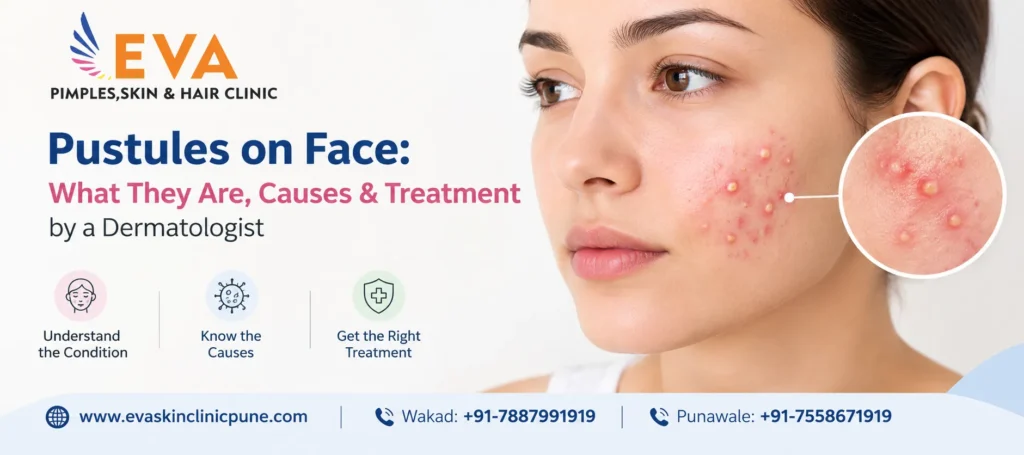
A small, red bump with a white or yellow centre can be tempting to squeeze. But that pus-filled spot may be an acne pustule, and picking it can increase irritation, infection risk, and the chance of marks.
Getting to know why pustules on the face develop is the first step towards choosing appropriate care. This article explains common causes, safe home care, treatment options and signs that mean it is time to consult a dermatologist.
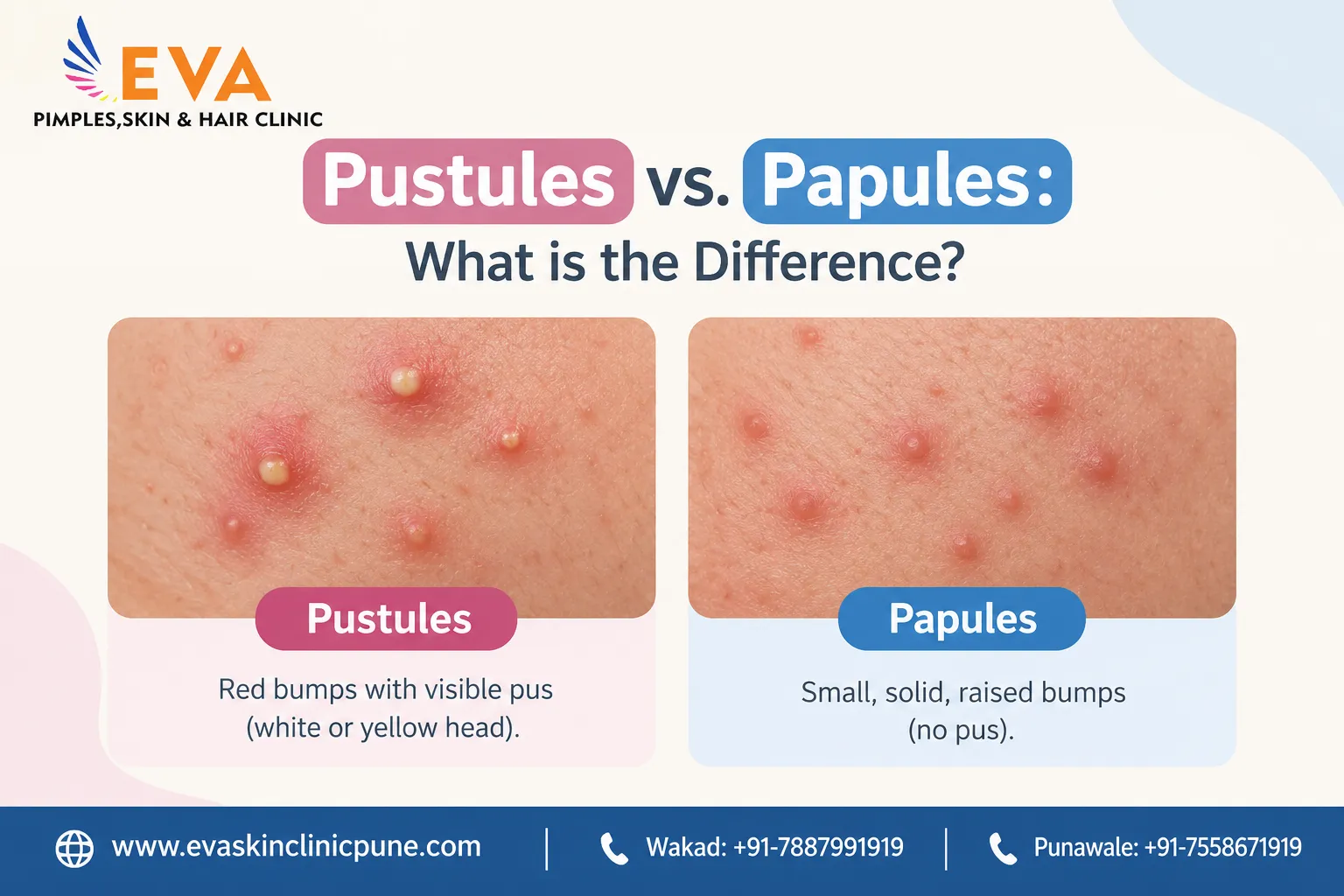
Pustules vs papules: what is the difference?
- Papules are small, raised, inflamed bumps without a visible pus-filled centre.
- Pustules have a visible white or yellow centre containing pus.
- Whiteheads are closed comedones and are not the same as pus-filled pustules.
- Nodules or cyst-like acne lesions are usually deeper, larger and often more painful.
A photograph or quick glance may not be enough to distinguish acne from folliculitis, perioral dermatitis, or another skin condition. Clinicians should assess persistent or unusual bumps.
What Causes Pustules on the Face?
Acne develops through a combination of excess sebum, blocked hair follicles, changes in the skin microbiome, and inflammation. Several factors can contribute to facial pustules:
1. Blocked pores and excess oil
Sebum helps protect the skin, but excess oil mixed with dead skin cells can block hair follicles. This creates an environment in which acne lesions may develop.
2. Acne-related inflammation
Inflammation around a blocked follicle can turn a small bump into a red, tender pustule. Different acne lesions may be present at the same time.
3. Hormonal changes
Hormonal fluctuations during puberty, menstrual cycles, or certain endocrine conditions can influence oil production. Some adults experience recurring acne around the chin and jawline.
4. Skincare and cosmetic products
Heavy or pore-clogging products may aggravate acne in susceptible people. Choose products labelled non-comedogenic when appropriate, and introduce new products one at a time.
5. Sweat, friction and occlusion
Sweat does not automatically cause acne, but friction from helmets, masks, tight straps or repeated touching can aggravate already irritated skin. Cleanse gently after heavy sweating.
6. Other conditions that resemble acne
Folliculitis, bacterial infection, rosacea and perioral dermatitis can sometimes look like acne. The correct diagnosis matters because their treatments may differ.
Pustules on Face Treatment
The right pustules on face treatment depends on the number of lesions, severity, skin sensitivity, your medical history and whether the bumps are truly acne. A dermatologist may recommend one or a combination.
1. Topical benzoyl peroxide
Benzoyl peroxide is an established acne treatment in Pune that helps reduce acne-associated bacteria and inflammation. It can cause dryness, redness or irritation, particularly when introduced too quickly. Use an appropriate formulation and follow product or clinician instructions.
2. Topical retinoids
Retinoids such as adapalene help prevent clogged pores and are commonly used in acne management. They may cause dryness, peeling or irritation at first. They are not suitable for everyone; people who are pregnant, planning pregnancy or breastfeeding should discuss treatment choices with a qualified clinician before use.
3. Salicylic acid or azelaic acid
These ingredients may be useful for selected acne patterns. Salicylic acid helps loosen dead skin cells within pores, while azelaic acid can help with acne and post-inflammatory dark marks. Suitability depends on the individual and the formulation.
4. Prescription medicines
For persistent or more extensive inflammatory acne, a dermatologist may consider prescription topical combinations or oral medicines. Antibiotics should be used only when clinically appropriate, for a limited duration and as part of a broader treatment plan, not as self-medication or antibiotic-only treatment. Severe, scarring or treatment-resistant acne may require specialist assessment for other options.
5. In-clinic procedures
Some patients may benefit from selected dermatologist-performed procedures as part of an overall acne plan. Procedures are not a substitute for controlling active acne, and not every procedure is appropriate for every pustule. The clinician should explain the expected benefit, risks, alternatives, and aftercare before treatment.
Acne Treatment in Pune
People looking for Acne Treatment in Pune should look for an assessment-led approach rather than a one-product solution. Treatment is usually selected according to acne type, severity, skin sensitivity, previous treatment response and the risk of scarring or pigmentation.
At Eva Pimples Skin & Hair Clinic, the acne service information can help readers understand the clinic’s acne-care offering. A consultation with an appropriately qualified dermatologist is needed to determine whether a particular medicine or procedure is suitable. No treatment can promise identical results for every person.
For further reading, explore the clinic’s guides on how often to wash your face if you have acne-prone skin, whether sunscreen can contribute to pimples, and laser vs microneedling for acne scars.
Conclusion
Pustules are pus-filled, inflamed bumps that commonly occur as part of acne, but not every facial pustule is acne. Gentle skin care, avoiding picking and using evidence-based treatment can help reduce irritation and support improvement. Persistent, painful or scarring breakouts deserve a professional assessment so the cause can be identified and treatment tailored to the person.
FAQ
Yes. Pustules are one type of inflammatory acne lesion. However, other conditions, such as folliculitis, can also cause pus-filled bumps, so persistent or unusual lesions may need examination.
Healing time varies with lesion depth, severity, skin care and treatment. A small lesion may settle sooner than a deeper inflamed spot. Repeated or persistent pustules should be assessed rather than repeatedly treated at home.
No. Squeezing can worsen inflammation, damage surrounding skin and increase the chance of scarring or dark marks. Allow it to settle and follow an appropriate acne-care plan.
Stress is not the only cause of acne, but it may aggravate breakouts in some people. Hormones, oil production, blocked follicles and inflammation also play roles.
A mild, gentle cleanser is usually a sensible starting point. Avoid abrasive scrubs and strong cleansers that leave the skin tight or irritated. A dermatologist can suggest a cleanser based on your skin type and treatment plan.
Benzoyl peroxide is a recognised acne treatment, but it may irritate some skin and is not appropriate for every type of facial bump. Follow product directions or a clinician’s advice, and stop and seek advice if you develop a significant reaction.
Some inflammatory acne lesions can leave dark marks or scars, particularly when they are deep, recurrent or picked. Early, appropriate acne management can help reduce the risk.
Acne vulgaris itself is not contagious. However, not every pus-filled bump is acne; certain infections can spread. A clinician can help identify the cause if lesions are unusual or spreading.
Diet is not a single or universal cause of acne. Some studies suggest that high-glycaemic dietary patterns may worsen acne in some people, but individual responses vary. Avoid restrictive diets without professional advice.