


How to Get Glowing Skin Before Navratri | 7 Expert Tips
Home | Blogs | Why Does Skin Become Oily During Monsoon? Best Tips by Expert Dermatologist in Wakad

Table of Contents
Introduction
Navratri is a time for colourful traditional outfits, energetic Garba nights, festive makeup, family gatherings, and memorable celebrations. While choosing the perfect outfit and accessories is exciting, preparing your skin for the festive season deserves equal attention.
Long hours outdoors, sweating, changing sleep schedules, and frequent makeup application can leave your skin looking tired, dull, or dehydrated. That is why starting a suitable skincare routine before Navratri can make a noticeable difference in how your skin looks and feels.
The secret to glowing skin before Navratri is not an expensive product or an overnight beauty treatment. It is a combination of consistent daily skin care, hydration, sun protection, and choosing products according to your skin type.
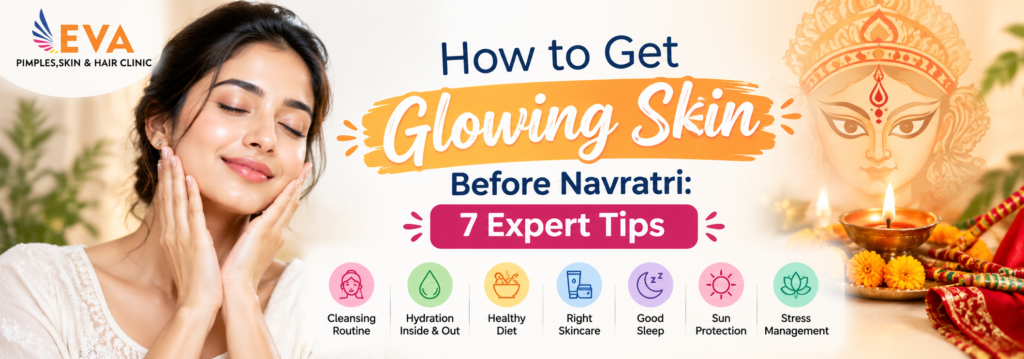
Here are seven practical, dermatologist-oriented tips to help you achieve healthy-looking, naturally radiant skin before the celebrations begin.
Why Is Pre-Navratri Skincare Important?
Your skin goes through several challenges during the festive season. Outdoor celebrations expose it to sunlight, dust, and pollution. Garba and Dandiya sessions increase sweating, while long hours of makeup can contribute to clogged pores if the skin is not cleansed properly.
A well-planned skincare routine helps you:
- Maintain skin hydration and reduce dryness.
- Support the skin barrier and minimise irritation.
- Improve the appearance of dull and uneven skin.
- Reduce the chances of makeup-related congestion.
- Protect the skin from sun-induced tanning and pigmentation.
- Maintain a fresh, comfortable appearance throughout the festivities.
Starting early gives your skin time to respond to a routine without unnecessary last-minute experimentation.
7 Expert Tips for Glowing Skin Before Navratri
1. Follow a Consistent Daily Skin Care Routine
Consistency is one of the most important parts of healthy skin care. Instead of using multiple products without a clear plan, follow a simple morning and evening routine.
Morning routine:
- Cleanse with a gentle face wash suitable for your skin type.
- Apply a hydrating serum if your skin tolerates it.
- Use a suitable moisturiser.
- Finish with broad-spectrum sunscreen.
Night routine:
- Remove makeup and sunscreen thoroughly.
- Cleanse your face gently.
- Apply your regular skincare treatment, if needed.
- Use a moisturiser to support overnight hydration.
For example, someone with oily skin who experiences shine after travelling through Pune’s traffic may benefit from a gentle gel cleanser and lightweight, non-comedogenic moisturiser. Someone with dry skin may need a cream-based cleanser and a richer moisturiser.
Avoid introducing several active ingredients at once, particularly if your skin is sensitive or prone to irritation.
2. Keep Your Skin Hydrated and Moisturised
Dehydrated skin can appear dull, rough, and less supple. Proper moisturisation helps maintain the skin barrier and gives the complexion a smoother, healthier-looking appearance.
Look for moisturisers containing ingredients such as:
- Hyaluronic acid: Helps attract and retain water in the skin.
- Glycerin: A humectant that supports skin hydration.
- Ceramides: Help support the skin’s protective barrier.
- Panthenol: Helps soothe and moisturise the skin.
Choose your moisturiser according to your skin type. Lightweight gel formulations may feel comfortable on oily skin, while richer creams can be useful for dry skin.
Hydration also involves your everyday habits. Drink water regularly throughout the day, particularly if you are spending time outdoors or dancing for extended periods.
Remember that drinking excessive amounts of water does not automatically make the skin glow. A balanced approach to hydration and topical moisturisation is more practical.
3. Use Sunscreen Every Day
Sun protection is essential for maintaining an even-looking complexion. Ultraviolet exposure can contribute to tanning, pigmentation, premature skin ageing, and sun damage.
Choose a broad-spectrum sunscreen with SPF 30 or higher that suits your skin type.
For effective daily use:
- Apply sunscreen generously to your face, neck, ears, and other exposed areas.
- Apply it before heading outdoors.
- Reapply approximately every two hours when outdoors, and after heavy sweating or swimming.
- Use additional protection such as hats, sunglasses, and shade when appropriate.
If you are attending daytime Navratri events, travelling for shopping, or spending time outdoors, sunscreen becomes particularly important.
For people concerned about dark spots or melasma, a dermatologist may recommend a tinted sunscreen containing iron oxides as part of a personalised pigmentation-care routine.
4. Exfoliate Gently for Smoother Skin
Exfoliation helps remove accumulated dead skin cells from the skin’s surface, which may improve the appearance of dullness and uneven texture.
However, excessive exfoliation can damage the skin barrier and cause redness, burning, dryness, and increased sensitivity.
Consider these precautions:
- Use a gentle exfoliating product appropriate for your skin type.
- Avoid aggressive physical scrubs.
- Do not combine multiple exfoliating products without guidance.
- Avoid exfoliating irritated, sunburned, or broken skin.
- Follow with moisturiser and daily sunscreen.
People who already tolerate mild chemical exfoliants may continue their established routine if appropriate.
If you have sensitive skin, active acne, eczema, or pigmentation concerns, consult a dermatologist before starting an exfoliation treatment.
Avoid experimenting with strong peels immediately before an important celebration. Healthy, comfortable skin matters more than temporary brightness.
5. Choose Skin-Friendly Foods and Healthy Habits
Your lifestyle can influence how your skin looks and feels. A balanced diet, sufficient sleep, and manageable stress levels support overall health and complement your skincare routine.
Include a variety of nutritious foods such as:
- Vitamin C sources: Oranges, guava, amla, and capsicum.
- Antioxidant-rich foods: Berries, tomatoes, carrots, and leafy vegetables.
- Healthy fats: Nuts, seeds, and other suitable sources of unsaturated fats.
- Protein sources: Dal, beans, eggs, paneer, fish, or other foods that suit your diet.
Try to maintain a regular sleep schedule, even when festive preparations become busy. Poor sleep can make the face appear tired and may affect how refreshed your skin looks.
If you are fasting during Navratri, plan balanced meals and maintain adequate fluid intake according to your needs and any medical advice you follow.
There is no single detox drink or food that can guarantee glowing skin. Consistent, balanced habits are more useful than restrictive diets or quick-fix remedies.
6. Prepare Your Skin for Festive Makeup
Festive makeup can complete your Navratri look, but applying heavy products to dry, irritated, or inadequately cleansed skin may lead to discomfort or breakouts.
Prepare your skin before makeup with a simple routine:
- Cleanse your face gently.
- Apply a lightweight moisturiser.
- Use sunscreen during the day.
- Allow skincare products to settle.
- Apply makeup suitable for your skin type.
Choose non-comedogenic products if you are prone to clogged pores. Clean makeup brushes and sponges regularly, and avoid sharing makeup products that come into direct contact with the skin.
After a long Garba night, remove makeup thoroughly before sleeping. Use a suitable makeup remover or cleansing oil, followed by a gentle cleanser if needed.
Avoid sleeping in makeup, as it can leave sweat, oil, and product residue on the skin.
7. Consider Professional Dermatologist-Guided Treatments
If your main concerns are persistent pigmentation, acne marks, uneven texture, or visible dullness, a dermatologist can assess your skin and discuss appropriate treatment options.
Depending on your skin condition, medical history, and goals, professional options may include:
- Supervised chemical peels.
- Selected hydrating facial treatments.
- Treatment plans for pigmentation.
- Acne management.
- Personalised skincare recommendations.
Not every skin concern needs a procedure. A suitable home routine may be enough for many people.
Professional treatments also have limitations. Some procedures can cause temporary redness, peeling, dryness, or sensitivity. Certain treatments require several sessions and adequate recovery time.
For this reason, plan any procedures well in advance of Navratri rather than scheduling an unfamiliar treatment immediately before a major event.
A consultation helps determine whether a treatment is appropriate, what results may reasonably be expected, and what aftercare is required.
Types of Dermatology Treatment for Healthier-Looking Skin
When basic Daily Skin Care is not enough to address concerns such as pigmentation, acne, uneven skin tone, scars, or dullness, a dermatologist may recommend a treatment based on your skin type and specific concern. Dermatology treatments are not one-size-fits-all, and the right option depends on an individual skin assessment.
Some commonly used dermatology treatments include:
1. Chemical Peels
Chemical peels use carefully selected solutions to exfoliate the skin and may help improve the appearance of uneven skin tone, pigmentation, acne, and rough texture. The strength and type of peel should be selected by a qualified professional according to the individual’s skin condition.
2. Hydrating and Skin-Rejuvenation Treatments
Professional hydrating treatments may be considered when the skin appears dry, tired, or dehydrated. These treatments can complement a regular moisturising routine and may temporarily improve the appearance of skin smoothness and radiance.
3. Acne and Acne-Scar Treatments
If breakouts or acne marks are affecting your complexion before Navratri, a dermatologist can identify the type and severity of acne and recommend an appropriate treatment plan. Depending on the concern, treatment may involve prescription skincare, procedures, or a combination of approaches.
4. Pigmentation Treatment
Dark spots, tanning, post-acne marks, and conditions such as melasma may require targeted dermatological care. Treatment options can vary considerably, so professional assessment is important before starting strong pigmentation products or procedures.
5. Laser and Light-Based Treatments
Certain laser and light-based procedures may be used for selected concerns such as pigmentation, acne scars, unwanted hair, or skin texture. These treatments require appropriate patient selection and professional assessment because results and recovery can vary.
6. Microneedling
Microneedling creates controlled microscopic punctures in the skin and may be used as part of treatment plans for selected acne scars and textural concerns. Multiple sessions may sometimes be required, and aftercare is important.
7. Dermatologist-Prescribed Skincare
Not every concern requires a procedure. A dermatologist may recommend prescription or clinically appropriate skincare ingredients depending on your skin type and condition. This can be particularly useful when managing acne, pigmentation, sensitivity, or other persistent concerns.
If you are considering any dermatology treatment before Navratri, avoid booking an unfamiliar procedure immediately before an important celebration. Some treatments can cause temporary redness, peeling, swelling, or sensitivity. A dermatologist can help determine the appropriate treatment, timing, and aftercare for your skin.
Step-by-Step Daily Skin Care Routine Before Navratri
A simple routine is easier to follow consistently. Here is a practical morning and evening schedule.
Morning routine
Step 1: Cleanse
Wash your face with a gentle cleanser to remove excess oil and overnight residue. Avoid harsh soaps that leave your skin feeling tight.
Step 2: Apply a hydrating product
Use a suitable hydrating serum if your skin benefits from it. This step is optional.
Step 3: Moisturise
Apply a moisturiser suited to your skin type to help maintain hydration.
Step 4: Protect
Finish with broad-spectrum SPF 30 or higher sunscreen. Reapply as required when spending time outdoors.
Evening routine
Step 1: Remove makeup and sunscreen
Use a makeup remover or cleansing oil if you have worn makeup or water-resistant sunscreen.
Step 2: Cleanse gently
Wash your face to remove sweat, dirt, and any remaining residue.
Step 3: Apply your regular treatment
If you already use a dermatologist-recommended product and tolerate it well, follow your prescribed instructions.
Step 4: Moisturise
Apply moisturiser to help maintain the skin barrier overnight.
The most effective routine is one that suits your skin and can be followed every day.
Common Skincare Mistakes to Avoid Before Navratri
Last-minute beauty experiments can create more problems than they solve. Keep these common mistakes in mind:
- Trying too many new products: Introducing several new products together makes it difficult to identify the cause of irritation.
- Over-exfoliating: Excessive scrubbing or strong exfoliating acids can cause inflammation and sensitivity.
- Skipping sunscreen: Sun exposure can worsen tanning and pigmentation.
- Using unsuitable home remedies: Lemon juice, undiluted essential oils, and abrasive DIY scrubs can irritate the skin.
- Ignoring makeup removal: Sleeping with makeup on may contribute to clogged pores and irritation.
- Expecting overnight results: Most changes in pigmentation, acne, and skin texture require time and appropriate treatment.
If you experience persistent burning, swelling, severe redness, or a sudden rash after using a product, stop using it and seek medical advice when necessary.
How to Maintain Your Festive Glow During Navratri
Your skincare routine should not stop after the first day of the festival. Nine days of celebrations can expose your skin to repeated sweating, makeup, and changes in sleep patterns.
To maintain a comfortable, fresh appearance:
- Cleanse gently after outdoor activities.
- Reapply sunscreen during daytime events.
- Carry a clean handkerchief or tissues to manage sweat without rubbing your face.
- Use lightweight makeup when appropriate.
- Keep your moisturiser routine consistent.
- Remove makeup before going to bed.
- Prioritise rest and balanced meals whenever possible.
Small, repeatable habits are more sustainable than repeatedly switching products throughout the festival.
Conclusion
Getting glowing skin before Navratri does not require a complicated routine or last-minute beauty experiments. Consistent daily skin care, adequate hydration, sun protection, balanced lifestyle habits, and suitable products can help your skin look healthier and feel more comfortable throughout the celebrations.
Remember that every skin type is different. A routine that works for someone else may not be appropriate for your skin, especially if you have acne, pigmentation, or sensitivity.
If you have specific skin concerns or want personalised advice before the festive season, consider consulting the dermatology team at Eva Skin Clinic Pune to understand which skincare options are suitable for your needs.
FAQs:
How can I get glowing skin before Navratri naturally?
Follow a consistent skincare routine that includes gentle cleansing, moisturising, and sunscreen. Eat a balanced diet, sleep adequately, and drink enough water. Avoid harsh scrubs and unverified home remedies. Natural-looking radiance comes from maintaining healthy skin rather than relying on a single quick fix.
How many days before Navratri should I start my skincare routine?
Ideally, maintain your skincare routine throughout the year. If you are preparing specifically for Navratri, begin at least two to four weeks beforehand when possible. This gives you time to establish consistent habits and identify any product irritation. Starting earlier is particularly useful if you have ongoing concerns such as acne or pigmentation.
What is the best daily skin care routine for glowing skin?
A practical morning routine includes a gentle cleanser, moisturiser, and broad-spectrum sunscreen. At night, remove makeup and sunscreen, cleanse, apply any suitable established treatment, and moisturise. Additional products such as hydrating serums are optional and should suit your individual skin needs.
Which ingredients help achieve a festive glow?
Ingredients such as hyaluronic acid, glycerin, ceramides, niacinamide, and vitamin C may support different skincare goals. Hyaluronic acid and glycerin help hydrate the skin, while niacinamide and vitamin C may help improve the appearance of uneven tone. The right ingredient depends on your skin type, tolerance, and specific concerns.
How can I get glowing skin before Navratri in seven days?
In seven days, focus on making your skin feel hydrated, comfortable, and well cared for. Use familiar products, moisturise regularly, apply sunscreen, and avoid aggressive exfoliation or unfamiliar treatments. You may notice improvements in dryness or dull appearance, but pigmentation, acne scars, and deeper skin concerns usually require longer-term care.
Is exfoliation necessary before Navratri?
Exfoliation is not essential for everyone. Some people may benefit from gentle exfoliation to improve the appearance of rough texture and dullness. However, over-exfoliation can cause irritation and sensitivity. If you have sensitive skin, acne, or pigmentation concerns, consult a dermatologist before starting a new exfoliating product.
Can I get a facial one day before Navratri?
A familiar, gentle facial may be tolerated by some people, but scheduling an unfamiliar facial one day before a major event carries a risk of redness, irritation, or breakouts. Avoid aggressive treatments close to celebrations. If you are considering a professional procedure, seek guidance from a qualified dermatologist and allow sufficient recovery time.
How can I prevent pimples during Navratri?
Cleanse after sweating, remove makeup before bed, and use non-comedogenic skincare and makeup products if you are acne-prone. Avoid repeatedly touching your face and keep makeup tools clean. If you have persistent or inflammatory acne, seek appropriate treatment rather than relying solely on home remedies.
What should I apply before festive makeup for a glowing finish?
Start with clean skin, apply a moisturiser that suits your skin type, and use sunscreen during the day. Allow your skincare products to settle before applying makeup. A well-hydrated skin surface can help makeup look smoother, although it cannot guarantee long-lasting or flawless makeup.