

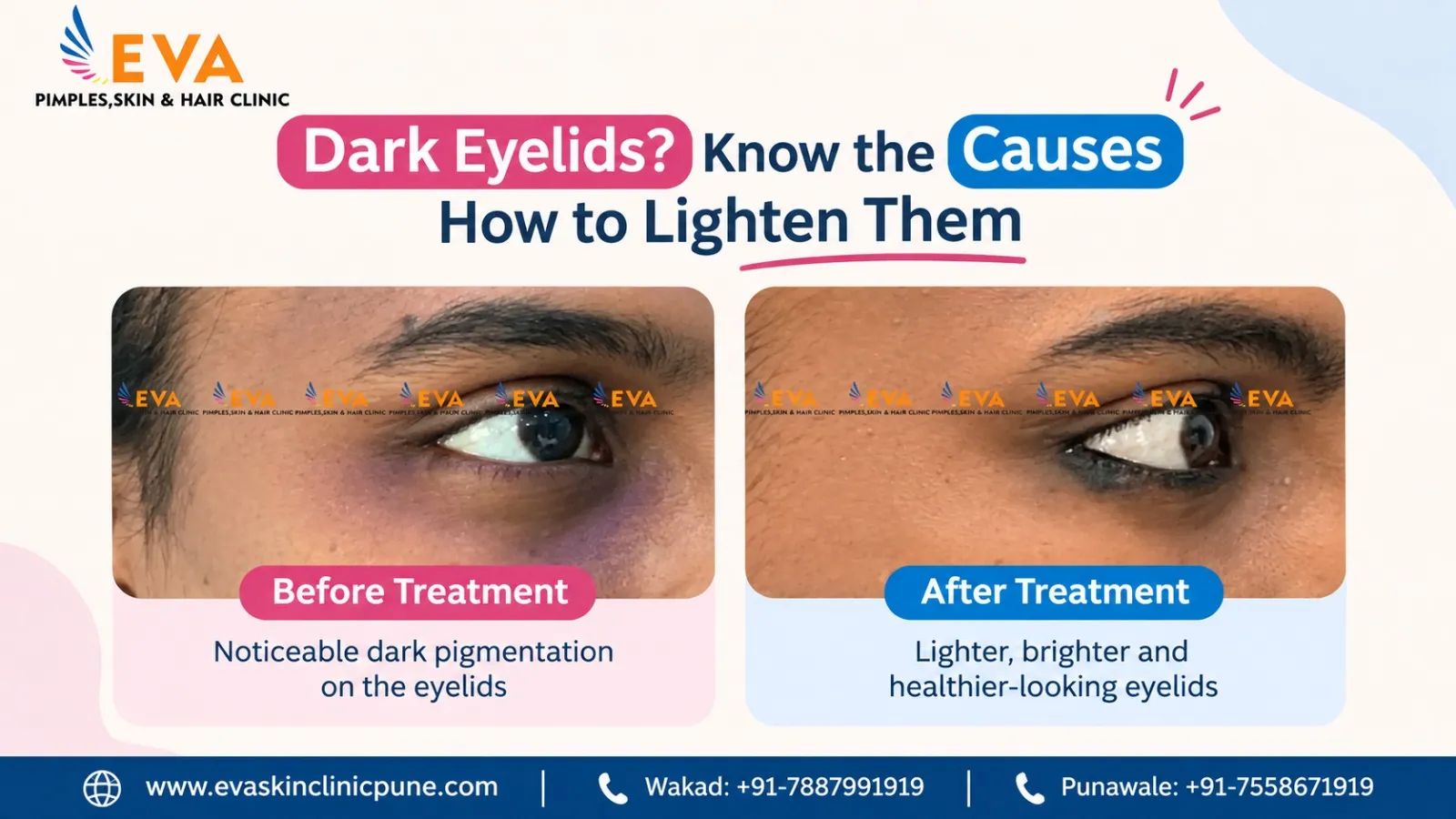

Why Are My Eyelids Dark? 6 Causes and How to Lighten Them
Home | Blogs | 6 Causes & How to Lighten Them | Dark Eyelids Treatment | Eva Pimples Skin & Hair Clinic

Table of Contents
If you have ever looked in the mirror after a full night’s sleep and still seen tired, shadowed eyes staring back, you are not alone. Dark eyelids are one of the most common concerns we see at Eva Skin Clinic in Pune, and the frustrating part is that concealer only hides them for a few hours. To show you what is really going on beneath the skin, let us walk you through the story of one patient, and the six causes we checked for before treating her.
Quick answer: Dark eyelids are most often caused by genetics, sun exposure, constant rubbing or allergies, reactions to eye makeup like kajal, thin skin with visible blood vessels, and lifestyle or medical factors such as poor sleep, anaemia or certain eye drops. Most cases lighten with the right mix of sun protection, trigger removal, dermatologist-prescribed creams and, where needed, gentle in-clinic treatments like peels or Q-switched laser.
The Case: “I Look Tired Even When I’m Not”
Sneha, a 28-year-old software tester from Wakad, walked into our clinic with one complaint: her upper and lower eyelids had turned noticeably darker over two years. Colleagues kept asking if she was unwell. She had tried potato slices, almond oil and three different under-eye creams, with no real change.
During the consultation, a few details stood out:
- Her mother had similar dark eyelids
- She applied kajal and eyeliner every single day
- She had seasonal allergies and rubbed her eyes often, especially during Pune’s dusty months
- She spent 9 to 10 hours a day in front of screens and slept barely 6 hours
- She never applied sunscreen near her eyes, fearing it would sting
No single cause explained everything, and that is exactly the point. Dark eyelids are usually the result of two or three factors working together, so before recommending any treatment, our dermatologist checked for each of the six causes below.
Causes:
Cause 1: Genetics and Natural Skin Tone
For many Indians, darker skin around the eyes is simply inherited. Research on periorbital hyperpigmentation shows it often runs in families, and people with medium to deep skin tones (Fitzpatrick types IV and V) produce more melanin around the eyes.
In Sneha’s case: Her mother’s similar pattern suggested a genetic base layer. This part cannot be erased completely, but it can be softened and kept from getting worse.
Cause 2: Sun Exposure
Eyelid skin is the thinnest on your face, so UV rays reach the pigment cells there very easily. Every unprotected commute, every two-wheeler ride under the afternoon sun, nudges those cells to make more melanin.
In Sneha’s case: No sunscreen and no sunglasses meant years of daily UV build-up, deepening the inherited pigment.
Cause 3: Rubbing, Allergies and Eczema
Itchy eyes from dust, pollen or allergic rhinitis lead to constant rubbing. Each rub causes mild inflammation, and inflamed skin heals darker. Dermatologists call this post-inflammatory hyperpigmentation (PIH). People with eczema (atopic dermatitis) are especially prone.
In Sneha’s case: Her seasonal allergies and rubbing habit were a major driver, and the darkening was worst exactly where she rubbed.
Cause 4: Makeup and Contact Allergy (Yes, Your Kajal)
Kajal, eyeliner, mascara, eye shadow and even makeup removers can trigger allergic contact dermatitis. Sometimes it is not even eye makeup: nail polish residue transferred when you touch your eyes is a known culprit. The reaction may be mild, just slight itching, but repeated irritation leaves pigment behind.
In Sneha’s case: Daily kajal was a strong suspect. A patch test later confirmed a reaction to an ingredient in her brand.
Cause 5: Thin Skin and Visible Blood Vessels
In some people, eyelid skin is so thin that the blood vessels and muscle beneath show through, giving a bluish or purplish tint rather than brown. With age, collagen loss and hollowing under the eyes cast shadows that make the area look even darker.
How we tell the difference: If gently stretching the skin makes the colour fade, the cause is likely vascular or shadow-related. If the brown stays, it is pigment. Sneha’s darkening was mostly brown, so this played only a minor role for her.
Cause 6: Lifestyle and Medical Factors
Short sleep, dehydration, smoking, alcohol and long screen hours make dark eyelids look worse by causing puffiness and dullness. A few medical causes also matter:
- Iron-deficiency anaemia or low vitamin B12, which can make the skin around the eyes look paler and darker
- Thyroid problems and hormonal changes such as pregnancy or melasma
- Prostaglandin eye drops used for glaucoma (and some lash serums), which can darken eyelid skin
In Sneha’s case: Basic blood tests showed mildly low haemoglobin, which she started treating with her physician.
How We Diagnosed Sneha
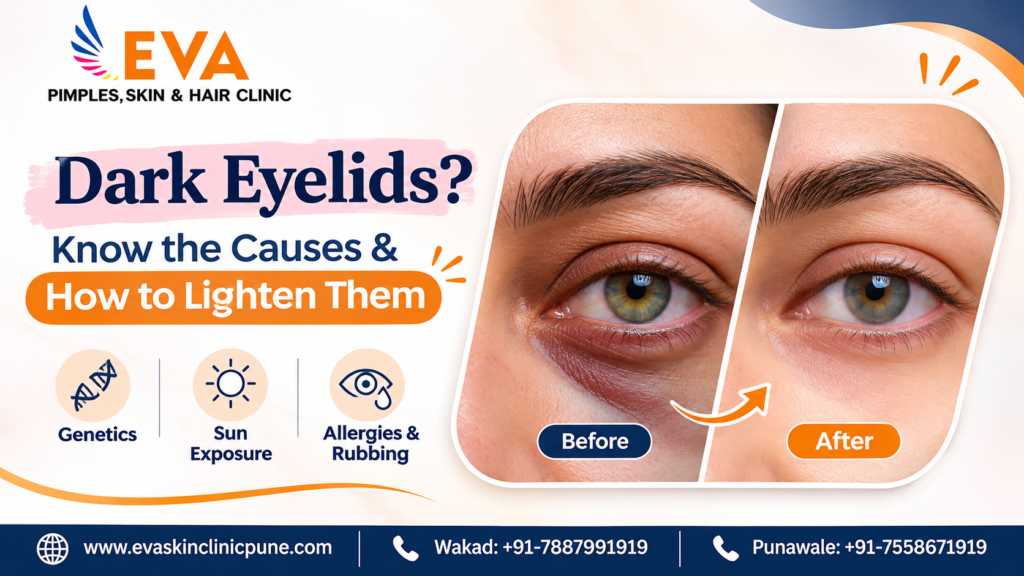
Rather than guessing, our dermatologist used a simple, step-by-step evaluation:
- Detailed history of family pattern, makeup, allergies, medicines and habits
- Stretch test and Wood’s lamp examination to see whether pigment sat in the upper or deeper skin layers
- Dermoscopy for a magnified look at the pigment pattern
- Patch testing for suspected cosmetic allergy
- Blood tests for haemoglobin, B12 and thyroid where indicated
Diagnosis: Mixed-type eyelid hyperpigmentation, combining a genetic base, sun damage, and PIH from rubbing and kajal allergy.
How to Lighten Dark Eyelids: What Actually Works
At-Home Care
- Use sunscreen around the eyes every day. Mineral (zinc oxide) formulas sting less. Add sunglasses outdoors.
- Stop rubbing. Treat the itch instead, with a cold compress or an antihistamine your doctor approves.
- Patch-test eye makeup and remove it gently every night.
- Sleep 7 to 8 hours and keep yourself hydrated.
- Choose gentle actives like niacinamide, vitamin C, caffeine or kojic acid in eye-specific formulas.
What to Avoid
- Lemon juice, baking soda or toothpaste on eyelids, which can burn and worsen pigment
- Strong face creams with high-strength acids or retinoids near the eyes without medical advice
- Unprescribed steroid or “fairness” creams, which can thin eyelid skin
In-Clinic Treatments
Treatment | Best For | Sessions (Typical) |
Chemical peels (eye-safe) | Surface-level pigment, dullness | 4 to 6 |
Q-switched Nd:YAG laser | Deeper, stubborn pigment | 4 to 8 |
PRP for skin | Thin skin, mild hollowness | 3 to 4 |
Dermal fillers | Shadows from tear-trough hollows | 1 (with touch-ups) |
Mesotherapy | Dull, tired-looking under-eye skin | 4 to 6 |
Dermatologist in Wakad will choose based on your skin type and the cause. Session counts are indicative only.
When to See a Dermatologist
Book a consultation if your eyelid darkening:
- Appears on only one side or keeps spreading
- Comes with itching, swelling, flaking or redness
- Started after a new eye drop, cosmetic or medicine
- Does not improve after 8 to 12 weeks of good home care
Key Takeaways
- Dark eyelids almost always have more than one cause
- Treating the trigger (allergy, kajal, sun, rubbing) matters as much as treating the pigment
- Eyelid skin is delicate, so DIY remedies often backfire
- A proper diagnosis lets your dermatologist choose the right cream, peel or laser
Ready to Brighten Your Eyes?
Tired of looking tired? At Eva Skin Clinic, our dermatologists diagnose the real cause of your dark eyelids and build a plan that suits your skin. Visit us in Wakad or Punawale, call +91-7887991919, or book your consultation online.
Disclaimer: This article is for general information and does not replace a consultation with a qualified dermatologist.
FAQ
Sleep is only one factor. Genetics, sun exposure, eye rubbing, makeup allergies and thin skin can all darken eyelids regardless of how much you sleep.
Upper eyelid skin is very thin and gets constant friction from rubbing, makeup and blinking, so it darkens faster. In Indian skin, a natural genetic tendency adds to it.
Darkening from a temporary trigger, like an allergy flare or lack of sleep, can fade once the trigger is removed. Genetic or long-standing pigment usually needs targeted treatment.
Yes. Some ingredients in kajal, eyeliner and mascara can trigger contact allergy, and repeated mild irritation leaves pigment behind. A patch test helps identify the culprit.
There is no overnight fix. Removing the trigger, daily sunscreen and a dermatologist-prescribed cream show early change in 6 to 8 weeks, while peels or laser can speed up results for stubborn cases.
Eye-safe creams with niacinamide, vitamin C, azelaic acid, kojic acid or caffeine work well for many people. Avoid strong acids, steroids or fairness creams near the eyes without a dermatologist’s advice.
When done by a qualified dermatologist with proper eye protection and settings suited to Indian skin, low-fluence Q-switched Nd:YAG laser is generally safe for eyelid pigmentation.
Yes. Iron-deficiency anaemia and low vitamin B12 have been linked to periorbital darkening, so your dermatologist may advise a blood test.
They are closely related. Both fall under periorbital hyperpigmentation, but dark circles usually refer to the under-eye area, while dark eyelids involve the upper or lower lid skin itself.