

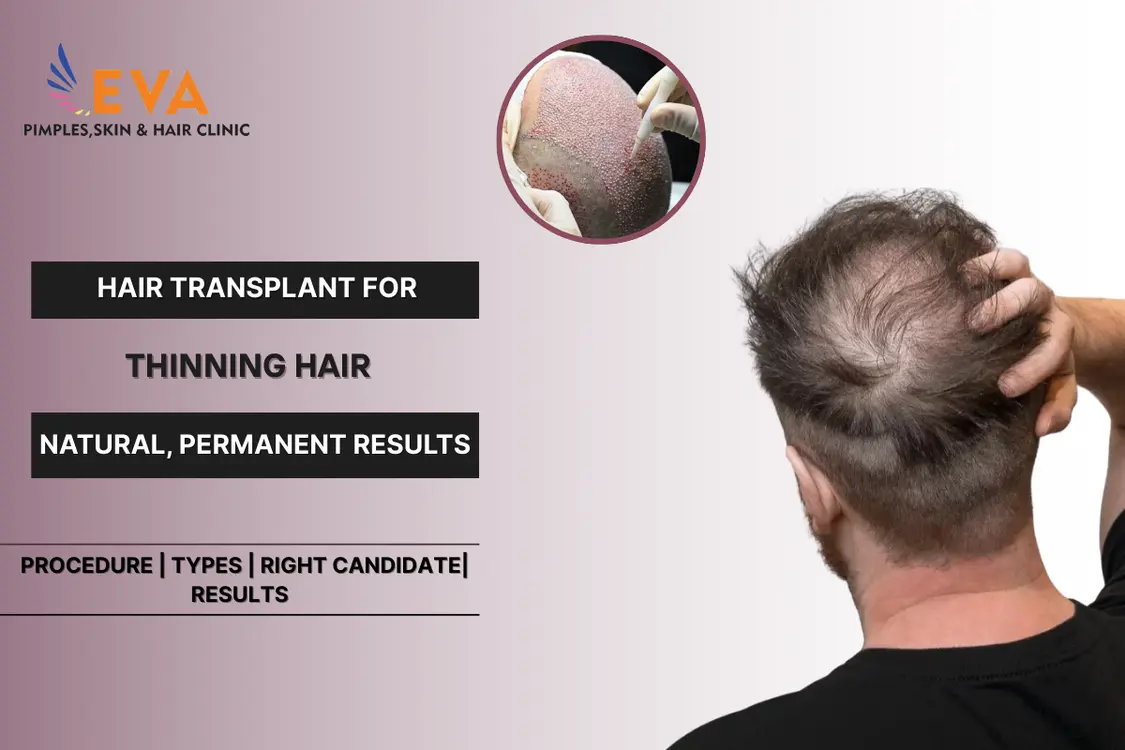

Hair Transplant for Thinning Hair Natural, Permanent Results
Home | Blogs | Hair Transplant for Thinning Hair | Natural, Permanent Results

Thinning hair is one of the earliest and most noticeable signs of hair loss. It may start as reduced volume, widening partition, or less density along the hairline, and gradually progress into visible balding patches. Many people try oils, supplements, or home remedies, but once the hair follicles become weak or inactive, topical treatments cannot restore the lost density.
A hair transplant is one of the most effective ways to restore natural hair growth in thinning areas. It offers permanent, natural-looking results by transplanting healthy follicles into areas where density has reduced. At Eva Pimples Skin & Hair Clinic, patients receive advanced, minimally invasive transplant solutions that help them regain fuller, thicker hair with confidence.
This guide explains everything you need to know about hair transplant for thinning hair—how it works, who it’s ideal for, results, and why Eva Clinic is a trusted choice.

Key Topics Discussed in This Article
Causes of Thinning Hair
Thinning hair is not always the same as balding. In thinning, the hair density gradually reduces, but some follicles may still be alive. Understanding the cause helps determine whether a transplant is right for you.
Common reasons include:
- Androgenetic Alopecia (Genetic Hair Loss): The most common cause, often seen as early hairline recession or crown thinning.
- Hormonal Imbalances: Changes in testosterone, thyroid hormones, or estrogen can trigger thinning.
- Ageing: Hair naturally becomes finer as you age.
- Nutritional Deficiencies: Lack of iron, protein, or vitamins weakens follicles.
- Stress and Lifestyle: High stress levels can push hair into the shedding phase prematurely.
- Excessive Styling: Heat, chemicals, or tight hairstyles damage follicles.
When thinning becomes persistent, a hair transplant becomes the most reliable, permanent solution.
Is a Hair Transplant Good for Thinning Hair?
Yes — it is one of the best treatments for restoring density.
Many patients assume hair transplants are only for people with bald patches, but thinning hair is also effectively treated by adding fresh, permanent follicles from the donor area (usually the back of the scalp).
This helps:
- Increase density
- Strengthen hairline
- Improve overall fullness
- Restore natural volume
The technique works exceptionally well when combined with medical therapy that stabilizes ongoing thinning.
How Hair Transplant Works for Thinning Hair
At Eva Pimples Skin & Hair Clinic, dermatologists use modern, minimally invasive techniques to provide comfortable and natural results.
- Donor Area Selection: Healthy, genetically strong follicles are chosen from the back or sides of the scalp.
- Extraction (FUE Technique): Individual follicles are gently extracted using micro tools, causing minimal discomfort.
- Implantation: Follicles are implanted into thinning areas with precise angling to match existing hair direction.
- Healing & Growth: The newly implanted follicles settle, shed, and then regrow naturally over the next few months.
Because these follicles are genetically resistant to hair fall, they continue to grow throughout life.
Types of Hair Transplant Techniques Used
Eva Clinic offers advanced techniques that ensure natural and permanent results for thinning hair:
FUE (Follicular Unit Extraction)
- No stitches
- Minimal downtime
- Natural hair direction and placement
- Ideal for thinning and small areas of hair loss
DHI (Direct Hair Implantation)
- Faster procedure
- More precise density
- Very natural-looking results
- Minimally invasive
These methods ensure faster healing and natural outcomes without noticeable scars.
Who Is the Right Candidate for a Hair Transplant for Thinning Hair?
You may be an ideal candidate if:
- Your hair thinning is stable
- You have enough donor hair
- You’re experiencing genetic hair loss
- You have early to moderate thinning
- You want long-term, permanent density improvement
Hair Transplant Results
Hair transplant results appear gradually because follicles go through natural growth cycles.
1–3 Months
Temporary shedding is normal.
4–6 Months
New hair begins to grow.
6–12 Months
Hair becomes thicker, fuller, and denser.
12 Months & Beyond
Final results show a natural increase in volume and density.
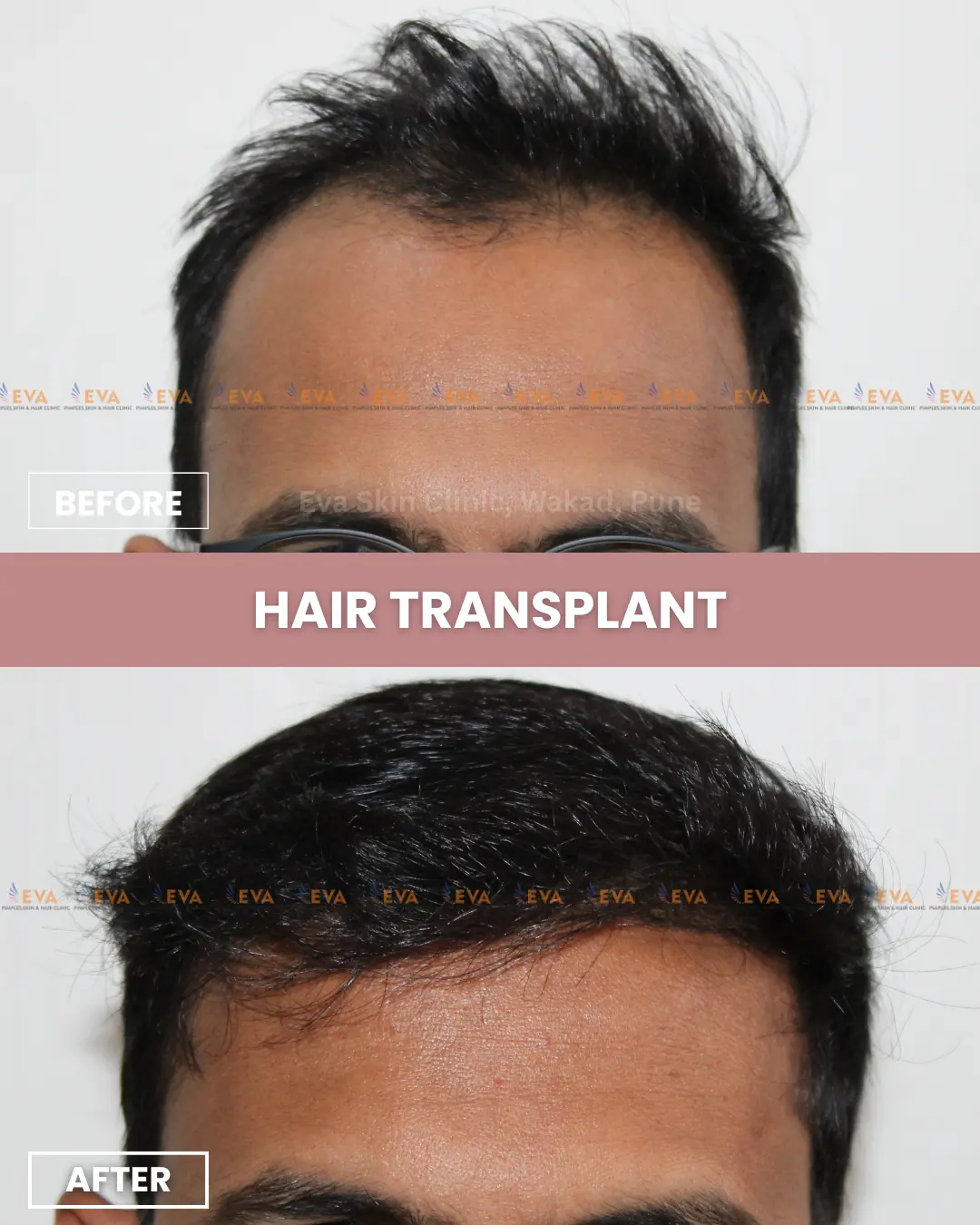
Patients often report a significant boost in confidence once the hairline becomes fuller and the thinning areas regain coverage.
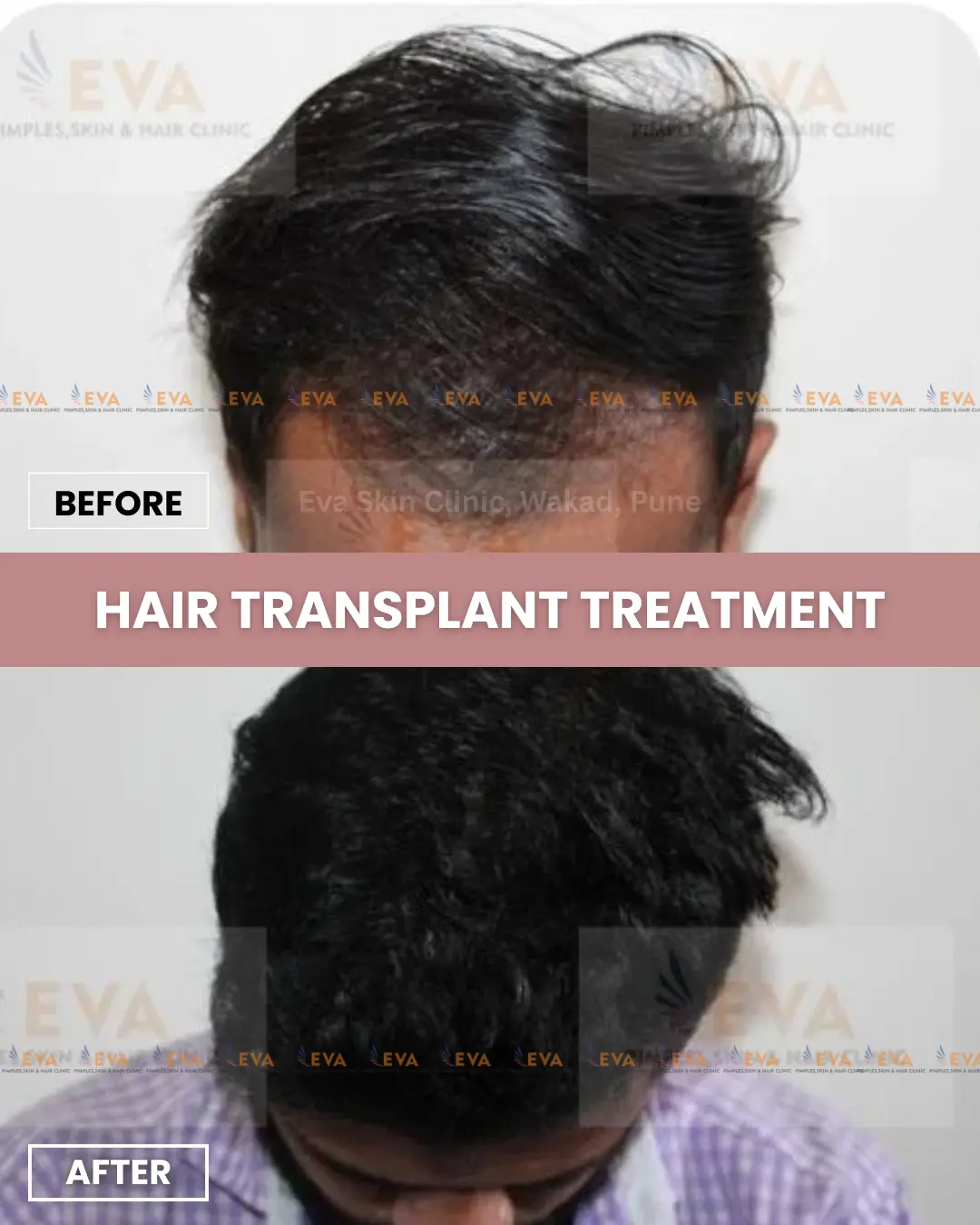
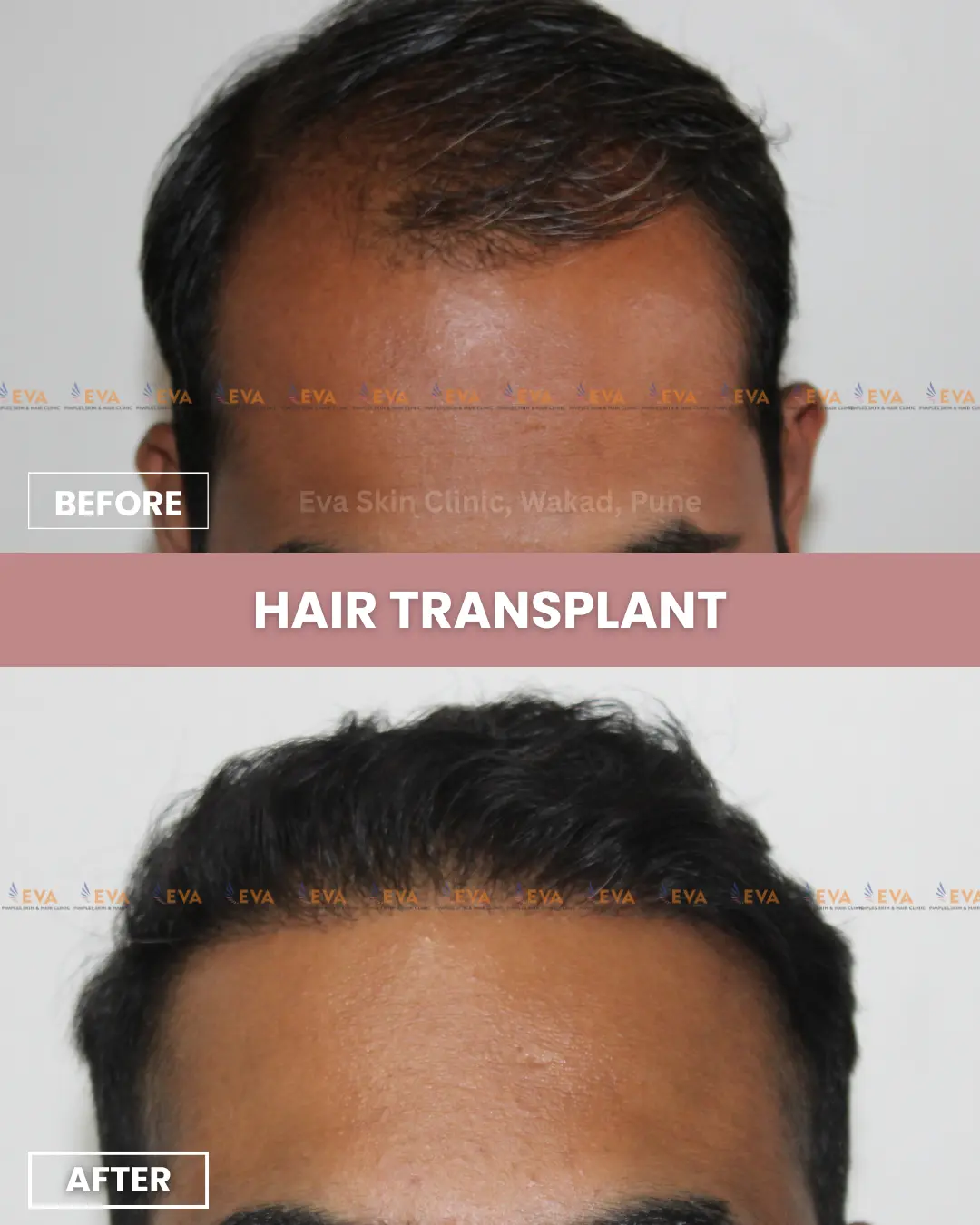
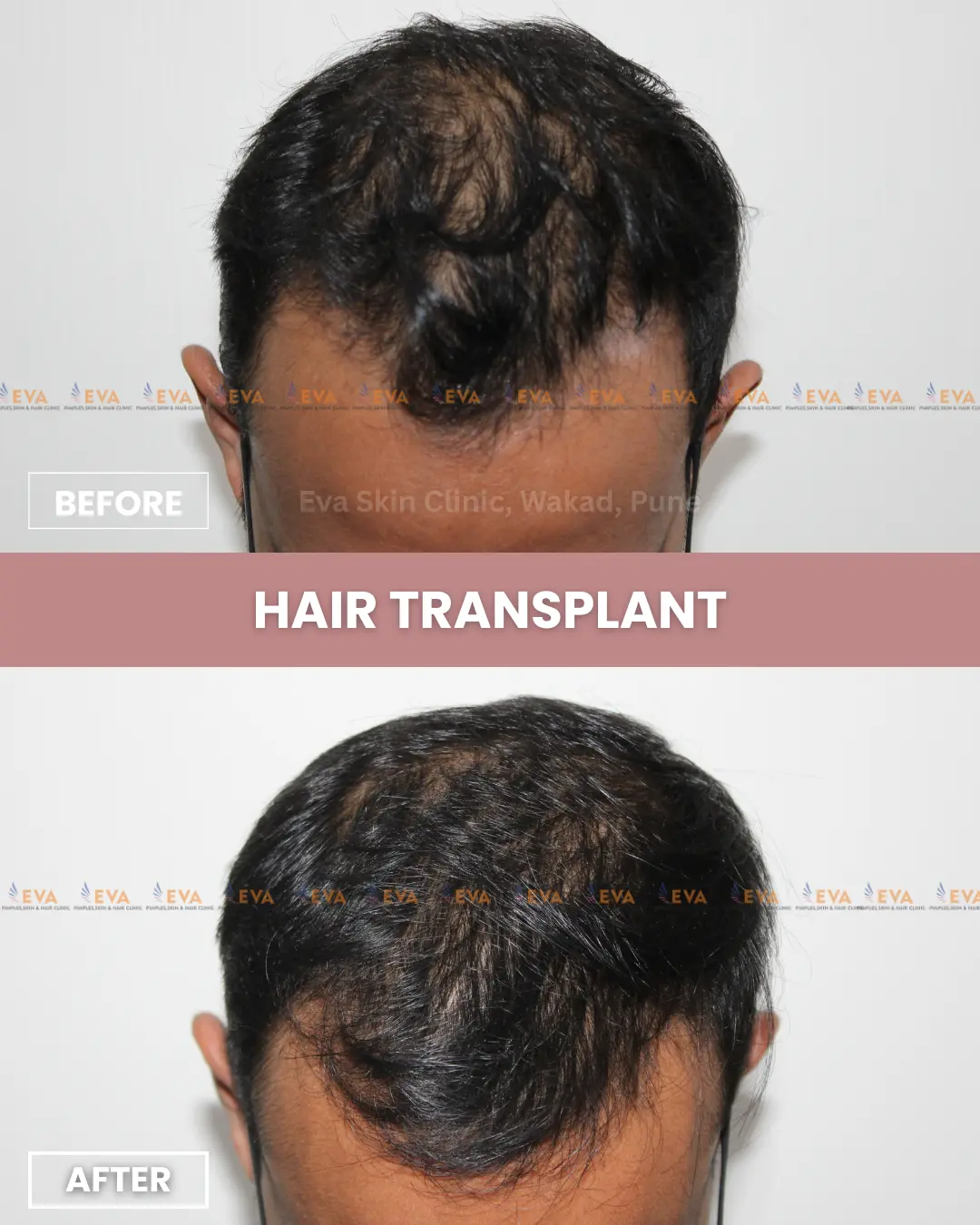
Why Choose Eva Pimples Skin & Hair Clinic for Hair Transplant in Pune?
Eva Pimples Skin & Hair Clinic is a trusted name for advanced hair restoration in Pune.
Experienced Dermatologists
Hair transplants are performed by expert dermatologists with strong experience in FUE and DHI.
High Graft Survival Rate
Advanced tools ensure maximum survival of implanted follicles.
Natural Hairline Design
The clinic focuses on creating soft, age-appropriate, and natural hairlines.
Safety & Hygiene First
International hygiene protocols and sterile equipment ensure safe procedures.
Transparent Costing
No hidden charges; complete clarity from consultation to aftercare.
Comprehensive Aftercare
PRP therapy, medications, and follow-up care support long-term results.
Cost of Hair Transplant in Pune
The cost varies based on:
- Technique used (FUE or DHI)
- Number of grafts required
- Scalp condition
- Expertise of the dermatologist
On average, hair transplant cost in Pune ranges from:
₹30,000 to ₹1,50,000+ depending on graft requirement.
Eva Pimples Skin & Hair Clinic provides customised quotes after a detailed hair analysis.