

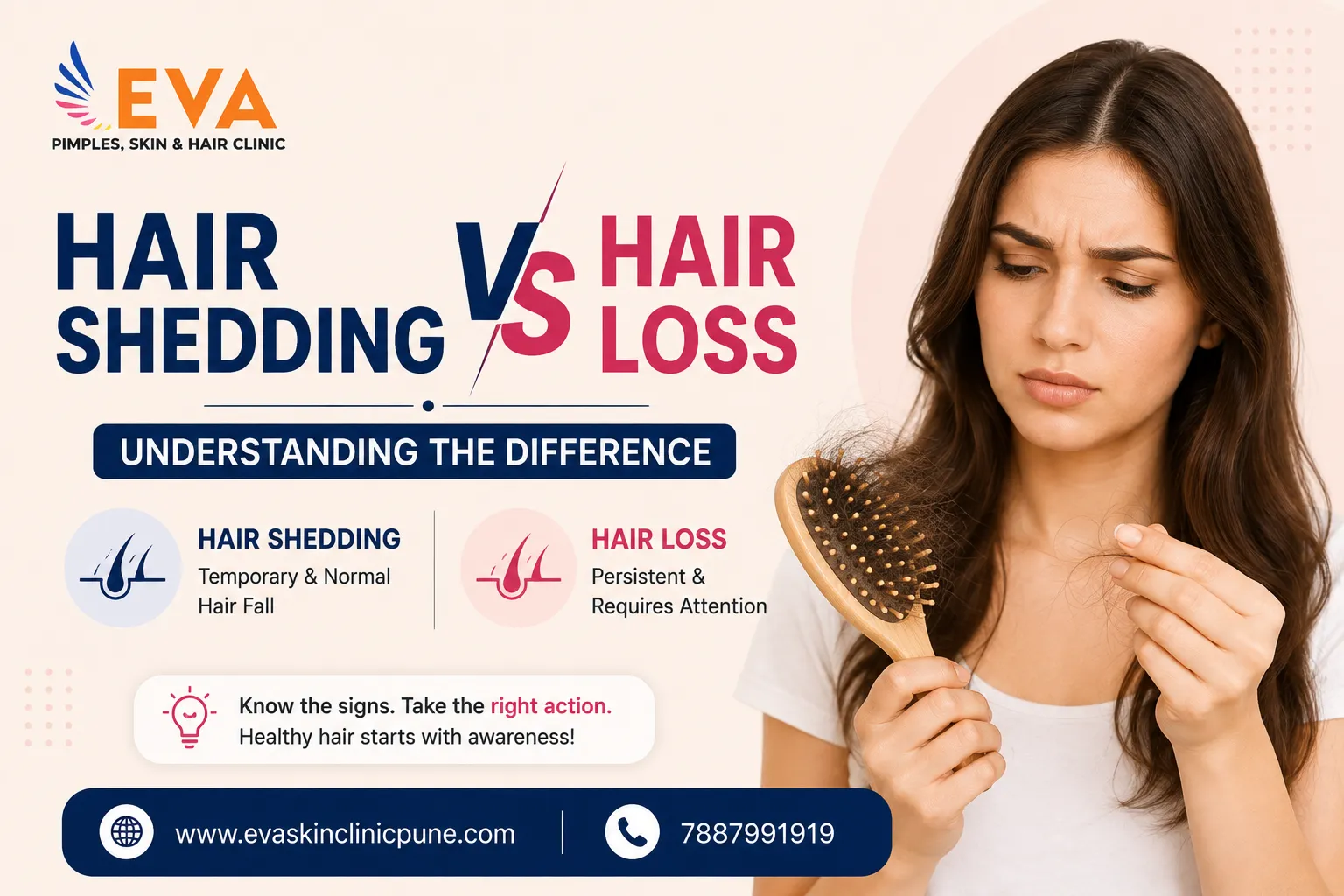

Hair Shedding vs Hair Loss | Understanding the Difference
Home | Blogs | Hair Shedding vs Hair Loss | Understanding the Difference

Table of Contents
Finding a few extra strands on your pillow or in the shower drain can feel alarming — but here’s the truth most people don’t hear often enough: not all hair fall is hair loss. Every single day, your scalp naturally sheds hair as part of its growth cycle. The real question is whether what you’re seeing is normal shedding or a sign of an underlying hair loss condition that needs treatment.
At Eva Pimples Skin & Hair Clinic, one of the most common concerns patients bring to our dermatologists and trichologists in Wakad, Pune is: “Is this normal, or should I be worried?” This article breaks down the science of hair shedding versus hair loss, so you know exactly when to relax and when to book a consultation.
Quick Answer
Hair shedding (medically called telogen effluvium) is a temporary increase in hair fall triggered by stress, illness, diet, or hormonal shifts — the follicle stays alive and hair regrows on its own within a few months. Hair loss (such as androgenetic alopecia or pattern baldness) is a progressive condition where follicles shrink or stop producing hair altogether, and it typically needs medical treatment to slow down or reverse.
Understanding the Normal Hair Growth Cycle
To understand shedding versus loss, it helps to know how hair actually grows. Every strand on your head cycles through three phases:
- Anagen (Growth Phase): Lasts 2–7 years. At any given time, about 85–90% of your scalp hair is in this active growth stage.
- Catagen (Transition Phase): A short 2–3 week phase where the follicle shrinks and growth slows.
- Telogen (Resting/Shedding Phase): Lasts around 2–3 months. The old hair rests, then releases to make way for new growth. Roughly 10–15% of your hair is in this phase at any time.
Because thousands of hairs are always cycling through telogen at once, losing some hair every single day is completely normal — it’s evidence the cycle is working correctly, not a sign that something is wrong.
What Is Hair Shedding? (Telogen Effluvium)
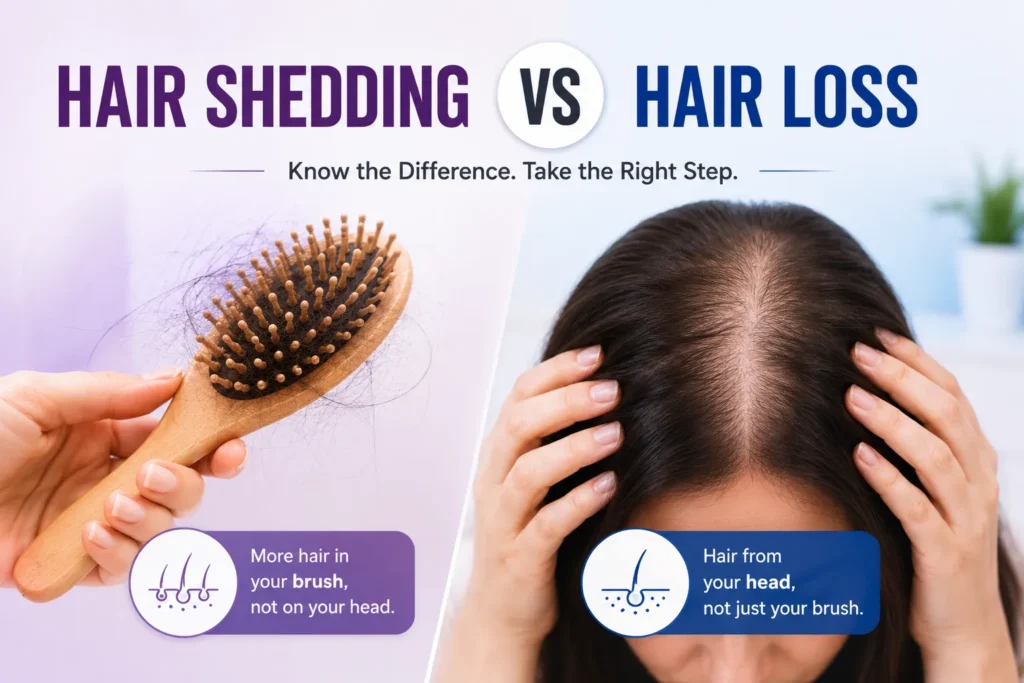
Hair shedding refers to a temporary, diffuse increase in the number of hairs entering the resting (telogen) phase and falling out — a condition dermatologists call telogen effluvium.
Key characteristics of hair shedding:
- Sudden increase in hair fall, often noticed 2–3 months after a triggering event
- Hair thins evenly all over the scalp rather than in a specific pattern
- The follicle itself remains healthy and alive
- It is almost always reversible once the underlying cause resolves
- Usually improves within 6–9 months without aggressive intervention
Common triggers of hair shedding include:
- High fever, viral infections, or major illness (including post-COVID shedding)
- Childbirth (postpartum shedding, which typically peaks around 3–4 months after delivery)
- Sudden or significant weight loss, crash dieting, or nutrient deficiencies (iron, protein, vitamin D, biotin)
- Major surgery or hospitalization
- Severe emotional stress or trauma
- Starting or stopping hormonal birth control
- Thyroid imbalances
- Certain medications (blood thinners, antidepressants, beta-blockers)
According to the American Academy of Dermatology, it’s normal to shed 50 to 100 hairs a day — shedding becomes a concern only when it clearly exceeds this baseline for an extended period.
What Is Hair Loss?
Hair loss is a broader, usually progressive condition in which hair follicles are damaged, shrink, or stop producing hair over time. Unlike shedding, hair loss does not typically resolve on its own.
The most common types of hair loss:
- Androgenetic Alopecia (Male/Female Pattern Baldness): The most common cause of permanent hair loss, driven by genetics and sensitivity to the hormone DHT. In men, it usually appears as a receding hairline and thinning crown. In women, it presents as diffuse thinning and a widening center part.
- Alopecia Areata: An autoimmune condition causing sudden, patchy hair loss.
- Anagen Effluvium: Rapid hair loss during the active growth phase, most commonly caused by chemotherapy or radiation.
- Traction Alopecia: Gradual hair loss from tight hairstyles, braids, or extensions that pull on the follicle over time.
- Scarring (Cicatricial) Alopecia: Permanent follicle destruction due to inflammation or scarring.
Key characteristics of hair loss:
- Follows a specific, often predictable pattern (hairline, crown, part-line, or patches)
- Progresses gradually over months to years (except alopecia areata, which can appear suddenly)
- Left untreated, it typically continues to worsen
- Requires clinical intervention to slow, stop, or partially reverse
Hair Shedding vs Hair Loss: Key Differences
| Feature | Hair Shedding (Telogen Effluvium) | Hair Loss (e.g., Androgenetic Alopecia) |
|---|---|---|
| Onset | Sudden, often after a triggering event | Gradual, over months or years |
| Pattern | Diffuse, all over the scalp | Localized — hairline, crown, part-line, or patches |
| Follicle health | Alive and functional | Shrinking, dormant, or damaged |
| Reversibility | Usually reversible in 6–9 months | Usually needs treatment to slow/reverse |
| Underlying cause | Stress, illness, diet, hormones, medication | Genetics, hormones (DHT), autoimmune, trauma |
| Regrowth without treatment | Yes, in most cases | Rarely, without medical or clinical treatment |
How to Tell the Difference: A Simple Self-Check
While only a dermatologist can give you a definitive diagnosis, these questions can help you gauge which category you’re likely dealing with:
- Did the increased shedding start after a specific event (illness, delivery, crash diet, major stress) 2–4 months ago? → More likely shedding.
- Is your hair thinning evenly, or is there a visible pattern (receding hairline, widening part, bald patch)? → A visible pattern points to hair loss.
- Has it been going on for more than 6–9 months with no improvement? → More likely a hair loss condition that needs treatment.
- Try the gentle pull test: Grasp about 20–30 strands and gently pull. Losing more than 4–6 hairs consistently may indicate active shedding or loss that’s worth evaluating.
If you’re still unsure, that uncertainty itself is a good reason to get a professional scalp analysis rather than guessing — or worse, waiting it out while a treatable condition progresses.
When Should You See a Dermatologist?
Book a consultation with Expert Dermatologist in Wakad if you notice any of the following:
- Shedding that continues beyond 6 months with no signs of slowing
- A visible bald patch, receding hairline, or widening part
- Hair thinning accompanied by scalp itching, redness, flaking, or pain
- Sudden clumps of hair falling out
- Family history of pattern baldness combined with early thinning
- Hair loss affecting your confidence or mental well-being
Early evaluation matters because conditions like androgenetic alopecia respond far better to treatment when caught early — waiting often means fewer follicles are left to save.
How We Diagnose Hair Shedding vs Hair Loss at Eva Pimples Skin & Hair Clinic
Our team doesn’t guess — we diagnose. A thorough evaluation typically includes:
- Detailed history: Recent illnesses, medications, diet, stress levels, family history, and hairstyling habits
- Trichoscopy (digital scalp and hair analysis): A magnified view of the scalp to assess follicle density, miniaturization, and pattern
- Pull test and hair pattern mapping
- Blood investigations where needed — including ferritin (iron stores), thyroid profile, vitamin D, and vitamin B12 — since deficiencies are a leading, correctable cause of shedding
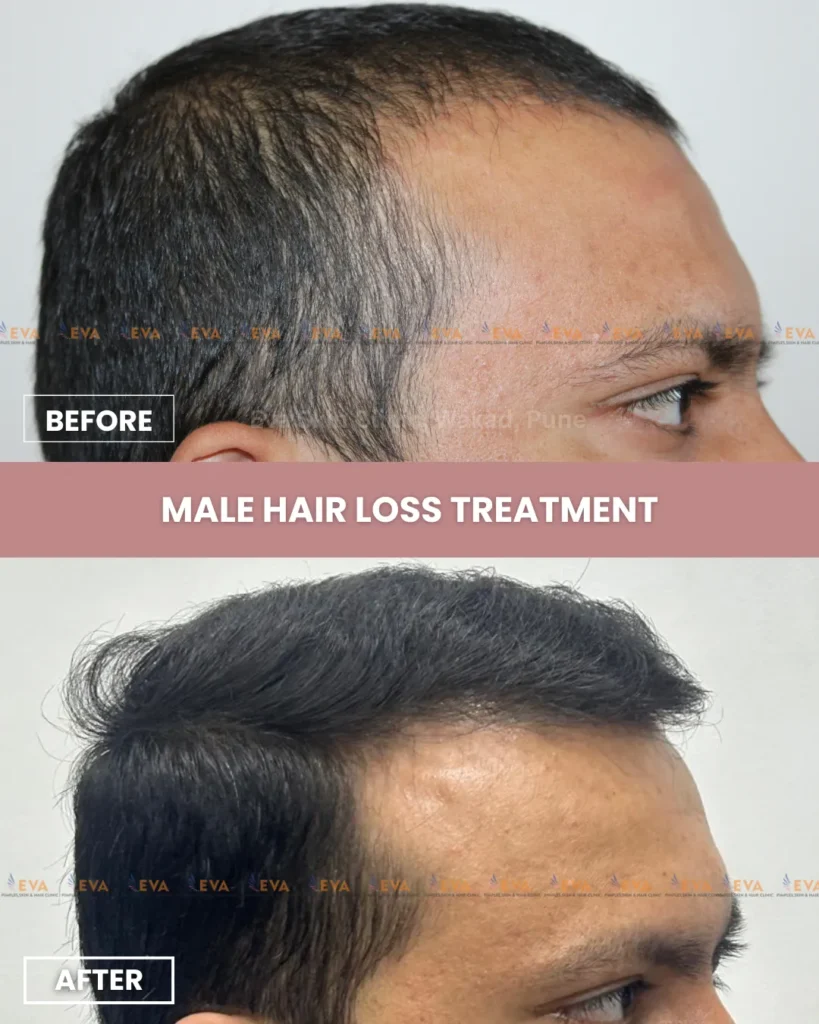
This is the same diagnostic approach our team uses across our male hair loss treatment and female hair loss treatment programs, so treatment is matched to the actual cause — not just the symptom.
Treatment Options
For hair shedding (telogen effluvium):
- Identifying and correcting the underlying trigger (nutrition, thyroid, stress, medication review)
- Iron, protein, and vitamin supplementation where deficient
- Gentle scalp care and reducing further stress on the hair (heat, tight styling, harsh chemicals)
- In most cases, shedding resolves naturally within a few months once the trigger is addressed
For hair loss (androgenetic alopecia and similar conditions):
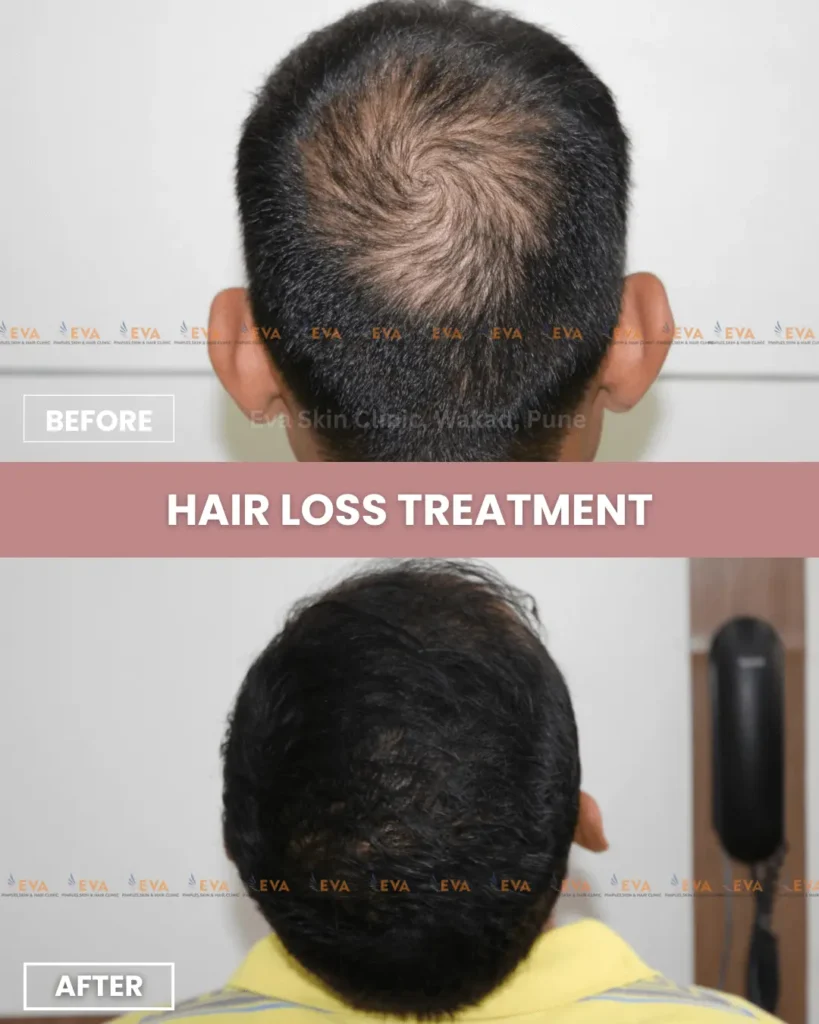
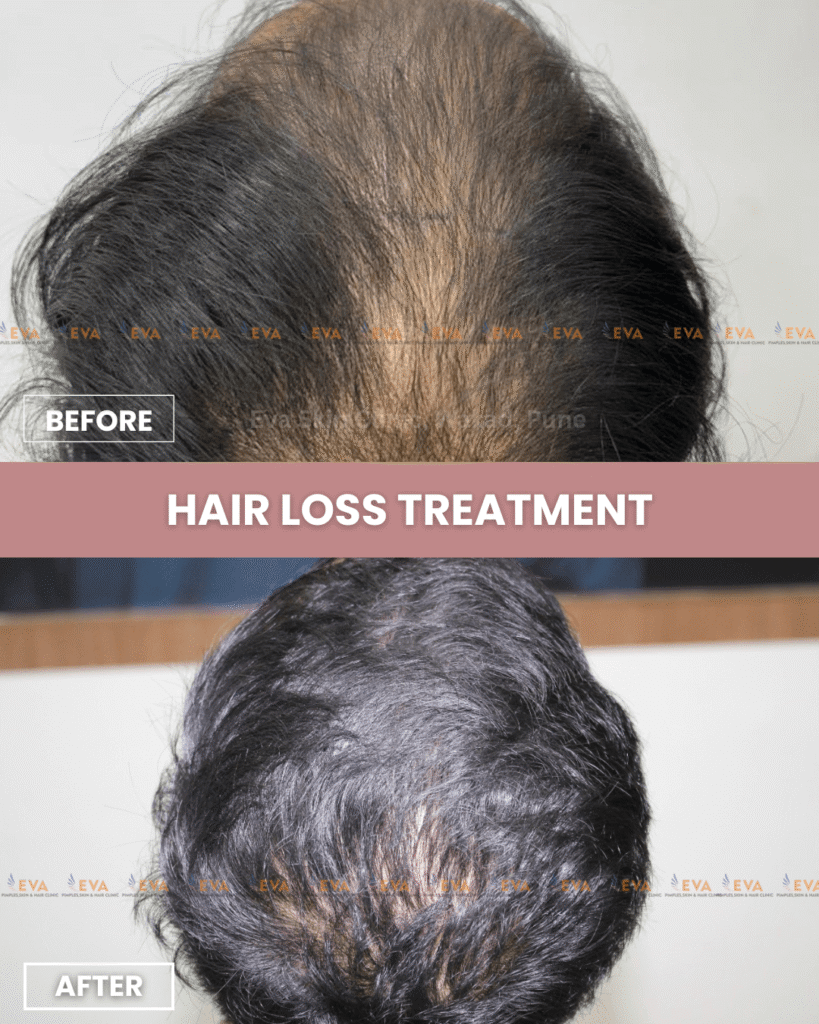
- PRP (Platelet-Rich Plasma) therapy: Uses your own blood platelets to stimulate dormant follicles
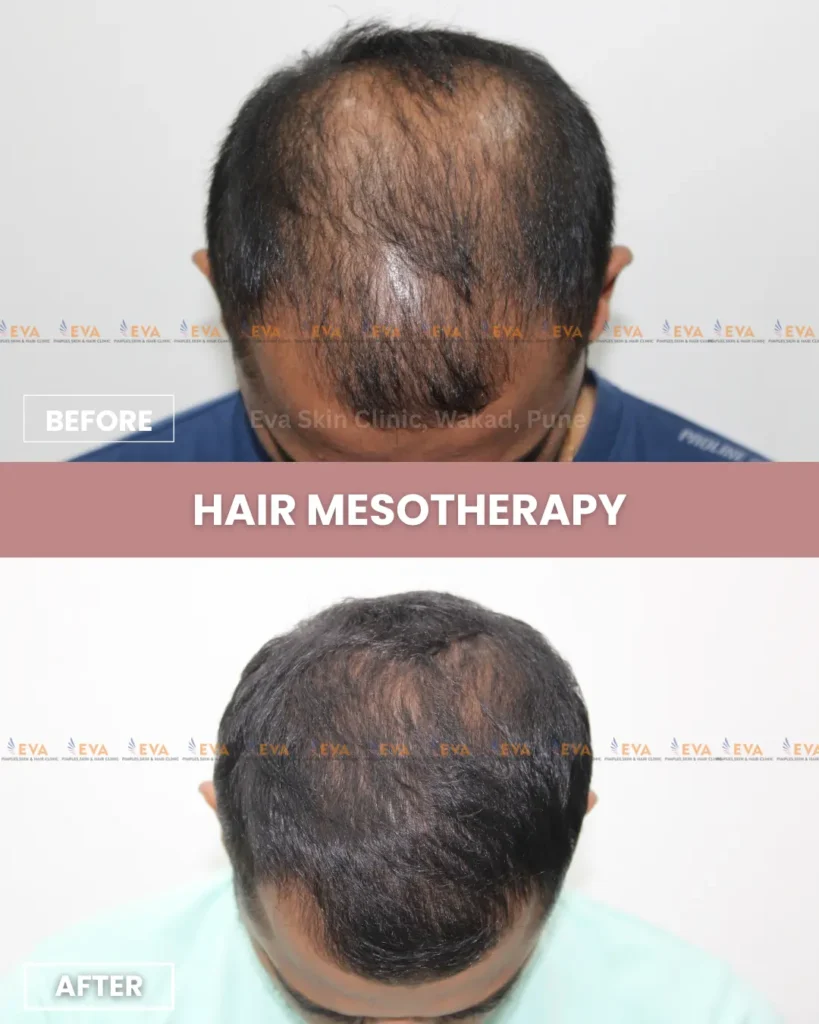
- Mesotherapy: Micro-injections of vitamins and growth factors directly into the scalp
- Low-Level Laser Therapy (LLLT): Red-light therapy shown to support follicle activity
- Medically prescribed oral/topical treatments: Evidence-based options for pattern hair loss
- Hair Transplant (FUE/DHI): For more advanced or stable pattern hair loss, where follicle relocation offers a permanent solution
Most patients see initial improvement within 6–12 weeks of starting a personalized plan, with fuller results visible over 4–6 months of consistent treatment.
Prevention Tips for Healthier Hair
- Eat a balanced diet rich in protein, iron, zinc, and biotin
- Manage stress through sleep, exercise, and relaxation practices
- Avoid tight hairstyles, excessive heat styling, and harsh chemical treatments
- Get annual blood work if you have a family history of thyroid issues or anemia
- Don’t ignore shedding that lasts longer than expected — early diagnosis prevents unnecessary worry and preserves more treatment options
Conclusion
A little hair in your brush isn’t a crisis — it’s biology. But shedding that’s excessive, prolonged, or forming a pattern deserves a real answer, not guesswork from the internet. If you’re unsure which side of the “shedding vs loss” line you’re on, Eva Pimples Skin & Hair Clinic in Wakad, Pune offers detailed trichoscopy-based scalp evaluations to help you get a clear diagnosis and a treatment plan built around your specific cause — not a one-size-fits-all approach.
FAQs
What is the difference between hair shedding and hair loss?
Hair shedding is a temporary increase in hair fall — usually caused by stress, illness, or hormonal changes — where the follicle stays healthy and hair regrows naturally. Hair loss is a more permanent condition, often caused by genetics or hormones, where follicles shrink or stop producing hair without treatment.
How many hairs is it normal to lose in a day?
It’s normal to lose between 50 and 100 hairs per day as part of the natural hair growth cycle. This is considered healthy shedding. Losing significantly more than this consistently, or noticing thinning in a specific pattern, may indicate an underlying hair loss condition.
What causes sudden hair shedding?
Sudden hair shedding, or telogen effluvium, is commonly triggered by high fever, illness, childbirth, major surgery, rapid weight loss, severe stress, or starting/stopping certain medications. Shedding usually appears 2–3 months after the triggering event and resolves on its own within 6–9 months.
Can hair shedding turn into permanent hair loss?
Hair shedding itself does not cause permanent hair loss, since the follicle remains alive. However, if the underlying trigger (such as a nutrient deficiency or thyroid issue) is never addressed, prolonged shedding can overlap with or unmask an existing pattern hair loss condition.
How do I know if I have androgenetic alopecia?
Androgenetic alopecia typically shows a distinct pattern: a receding hairline and thinning crown in men, or a widening center part and diffuse thinning at the crown in women. It progresses gradually over months to years and does not reverse on its own without treatment.
When should I see a dermatologist for hair fall?
See a dermatologist if shedding lasts longer than 6 months, if you notice a bald patch or receding hairline, or if hair fall comes with scalp itching, redness, or flaking.
What tests are used to diagnose the cause of hair loss?
Dermatologists typically use trichoscopy (digital scalp analysis), a pull test, and blood investigations such as ferritin, thyroid profile, vitamin D, and vitamin B12 to identify whether hair fall is due to shedding, pattern hair loss, or a nutritional/hormonal deficiency.
What is the best treatment for hair loss vs hair shedding?
Hair shedding is treated by correcting the underlying cause, such as nutritional deficiencies or stress, and usually resolves on its own. Hair loss conditions like androgenetic alopecia often need active treatment such as PRP therapy, mesotherapy, low-level laser therapy, or hair transplant for lasting results.