

Black Coffee and Acne: Is Your Morning Cup Really Causing Breakouts?
Black Coffee and Acne: Does Your Morning Cup Cause Breakouts? | Eva Pimples, Skin & Hair Clinic

Table of Contents
You switched to black coffee to cut sugar, and then a fresh pimple shows up on your chin. Naturally, your morning cup becomes the first suspect. The link between black coffee and acne is one of the most common questions we hear at Eva Pimples Skin & Hair Clinic in Pune, and the honest answer is more reassuring than most people expect. Coffee itself is rarely the villain, but a few habits around it can quietly push your skin towards breakouts. Let us look at what the science really says.
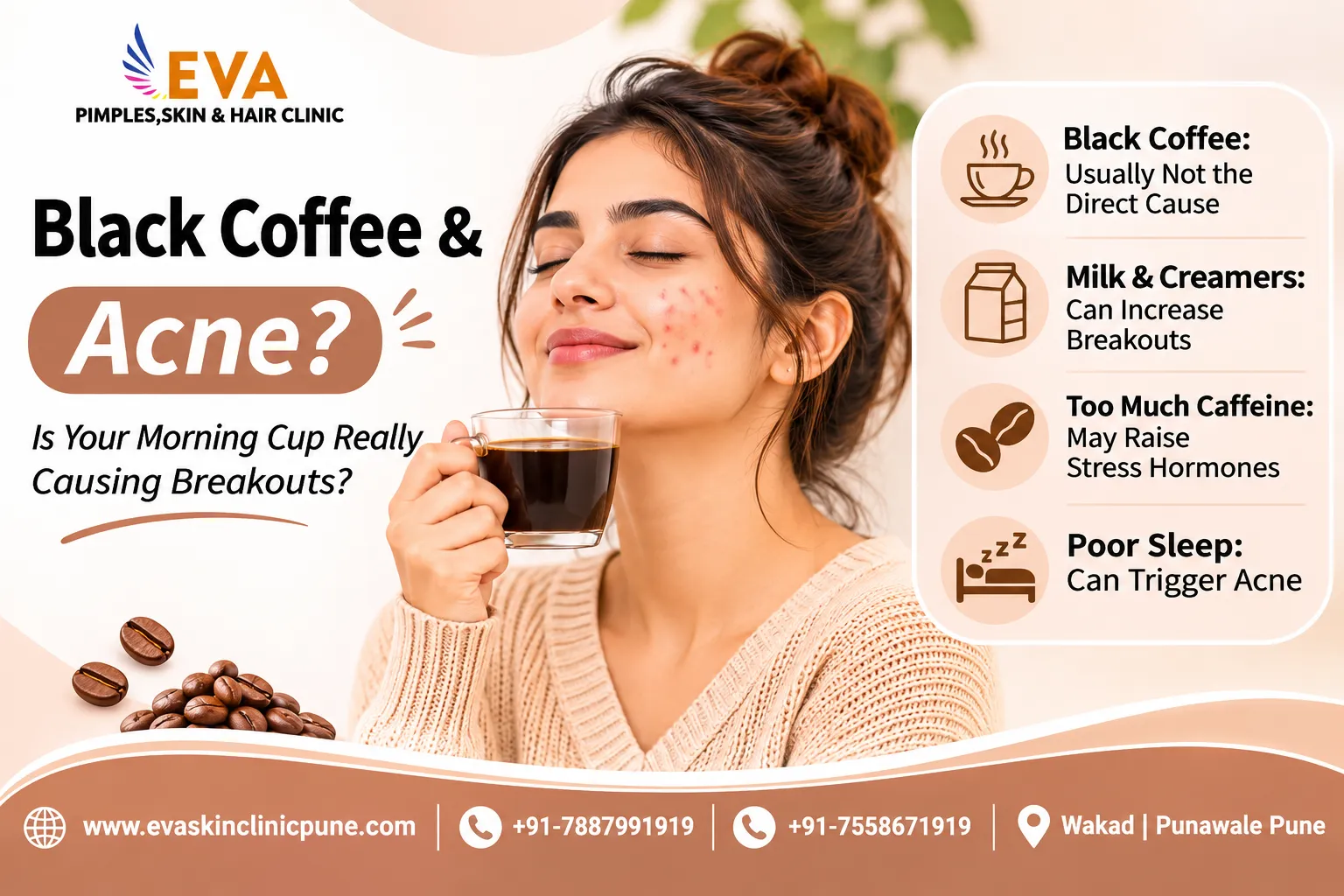
Quick answer: Black coffee on its own is not proven to cause acne. What usually triggers breakouts is how you drink it: added sugar, milk and sweet creamers, too many cups that raise stress hormones, and caffeine late in the day that spoils your sleep. One or two cups of plain black coffee in the morning is generally fine for acne-prone skin.
Does Black Coffee Cause Acne?
The short answer is NO. There is no strong scientific evidence that black coffee directly causes acne. Coffee does not clog pores, and plain black coffee has almost no sugar or calories.
However, coffee can indirectly make existing acne worse in certain situations. It all depends on three things:
- What you add to your cup
- How much you drink in a day
- When you drink it
So if you are drinking two cups of black coffee before noon and still breaking out, the cause is most likely somewhere else.

How Coffee Can Indirectly Affect Your Skin
1. Caffeine and Stress Hormones
Caffeine can raise cortisol, the body’s stress hormone, especially when you drink a lot or are already stressed. Higher cortisol can push oil glands to make more sebum, and extra oil is one of the main ingredients of a pimple. One or two cups rarely cause trouble, but four or five cups on a stressful workday can tip the balance.
2. Poor Sleep
Caffeine can stay in your system for several hours. That 5 pm coffee during a deadline may be the reason you are tossing in bed at midnight. Poor sleep raises stress hormones and slows skin repair, and many people notice breakouts after a week of short nights.
3. Coffee on an Empty Stomach
Some people skip breakfast and survive on coffee till lunch. This can leave you shaky, stressed and reaching for sugary snacks later in the day, which is a bigger acne trigger than the coffee itself.
The Real Culprits | What You Add to Your Coffee
This is where most coffee-related breakouts actually come from.
Milk
Several large studies have linked dairy milk, especially skimmed milk, with more acne. Milk contains hormones and proteins that may raise insulin and growth-factor levels, which can increase oil production. That daily milky filter coffee, cappuccino or latte could matter more than the coffee in it.
Sugar and Syrups
Sugar spikes blood sugar and insulin, and diets with a high glycemic load are linked to more acne. A café frappé or flavoured cold coffee can carry as much sugar as a dessert, and two teaspoons of sugar in every cup adds up quickly over a day.
Creamers and Whipped Toppings
Flavoured creamers, whipped cream and sweet toppings combine sugar and dairy in one go, making them the most acne-unfriendly add-ons.
Coffee Types Ranked for Acne-Prone Skin
|
Coffee Type |
Acne Risk |
Why |
|
Plain black coffee or espresso |
Low |
No sugar or dairy |
|
Black coffee with a little jaggery or honey |
Low to moderate |
Still adds sugar |
|
Coffee with plant milk (unsweetened) |
Low to moderate |
No dairy, but check for added sugar |
|
Milky filter coffee or cappuccino with sugar |
Moderate |
Dairy plus sugar |
|
Cold coffee, frappé or flavoured latte |
High |
High sugar, dairy and often cream |
How to Enjoy Coffee Without Breakouts
You do not have to give up your morning cup. A few smart swaps go a long way:
- Stick to 1 to 2 cups a day, ideally before 2 pm
- Drink it black, or use unsweetened plant milk if you need it lighter
- Skip sugar and syrups, or cut down gradually
- Do not replace breakfast with coffee; pair it with a proper meal
- Drink water alongside your coffee to stay hydrated
- Protect your sleep, aiming for 7 to 8 hours
- Watch your hands and cup: touching your face while working or resting your chin on your hand can add to breakouts
When Acne Is Not About Coffee
If you have already switched to black coffee and are still getting pimples, the real cause is likely one of these:
- Hormonal changes, such as PCOS or pre-period flares along the jaw and chin
- Wrong skincare or makeup that clogs pores
- Stress, poor sleep or an irregular routine
- Diet high in sugar, fried food or dairy
- Sunscreen or moisturiser that does not suit your skin type
- Untreated acne that needs medical care
In these cases, cutting coffee will not fix the problem. A dermatologist can find the real trigger and treat it.
When to See a Dermatologist
Book a consultation if your acne:
- Is painful, deep or cystic
- Keeps coming back in the same area, like the jawline
- Leaves dark marks or scars
- Has not improved after 8 to 12 weeks of good skincare and lifestyle changes
Treating acne early is the best way to prevent long-term marks and scars.
Get to the Root of Your Breakouts
-
Not sure what is triggering your acne? Our skin specialist at Eva Pimples Skin & Hair Clinic will look at your skin, routine and lifestyle to find the real cause and create a treatment plan that works. Visit us in Wakad or Punawale, call +91-7887991919, or book your consultation online.
FAQ's
Does black coffee cause acne?
No, black coffee on its own is not proven to cause acne. Breakouts linked to coffee usually come from added milk and sugar, too much caffeine or poor sleep.
Is black coffee good for acne-prone skin?
Plain black coffee is one of the better coffee choices for acne-prone skin because it has no sugar or dairy. Keep it to one or two cups a day, ideally before the afternoon.
Can caffeine cause hormonal acne?
Caffeine does not directly cause hormonal acne, but large amounts can raise cortisol, the stress hormone. Higher cortisol may increase oil production and worsen existing breakouts.
Does milk coffee cause pimples?
Milk coffee may contribute to pimples in some people. Studies have linked dairy milk, especially skimmed milk, to higher acne rates, and added sugar makes it worse.
How many cups of coffee are safe for skin?
For most people, one to two cups a day is unlikely to affect the skin. More than that can raise stress hormones and disturb sleep, both of which can worsen acne.
Does cold coffee cause acne?
Café-style cold coffee often contains a lot of sugar, milk and cream, which can trigger breakouts. A plain iced black coffee is a much skin-friendlier option.
Should I quit coffee to get clear skin?
Usually not. Switching to black coffee, cutting sugar and avoiding late-day cups is often enough. If acne continues, see a dermatologist to find the real cause.
Can coffee on an empty stomach cause acne?
It does not directly cause acne, but skipping meals and relying on coffee can raise stress levels and lead to sugary snacking, which may trigger breakouts.
Is coffee with jaggery or honey better for acne?
It is slightly better than refined sugar, but jaggery and honey still raise blood sugar. Using less of any sweetener is the best option for acne-prone skin.
Can applying coffee on the face help acne?
Coffee scrubs are too rough for acne-prone skin and can irritate active pimples. Caffeine in well-formulated skincare may help puffiness, but it is not an acne treatment.