
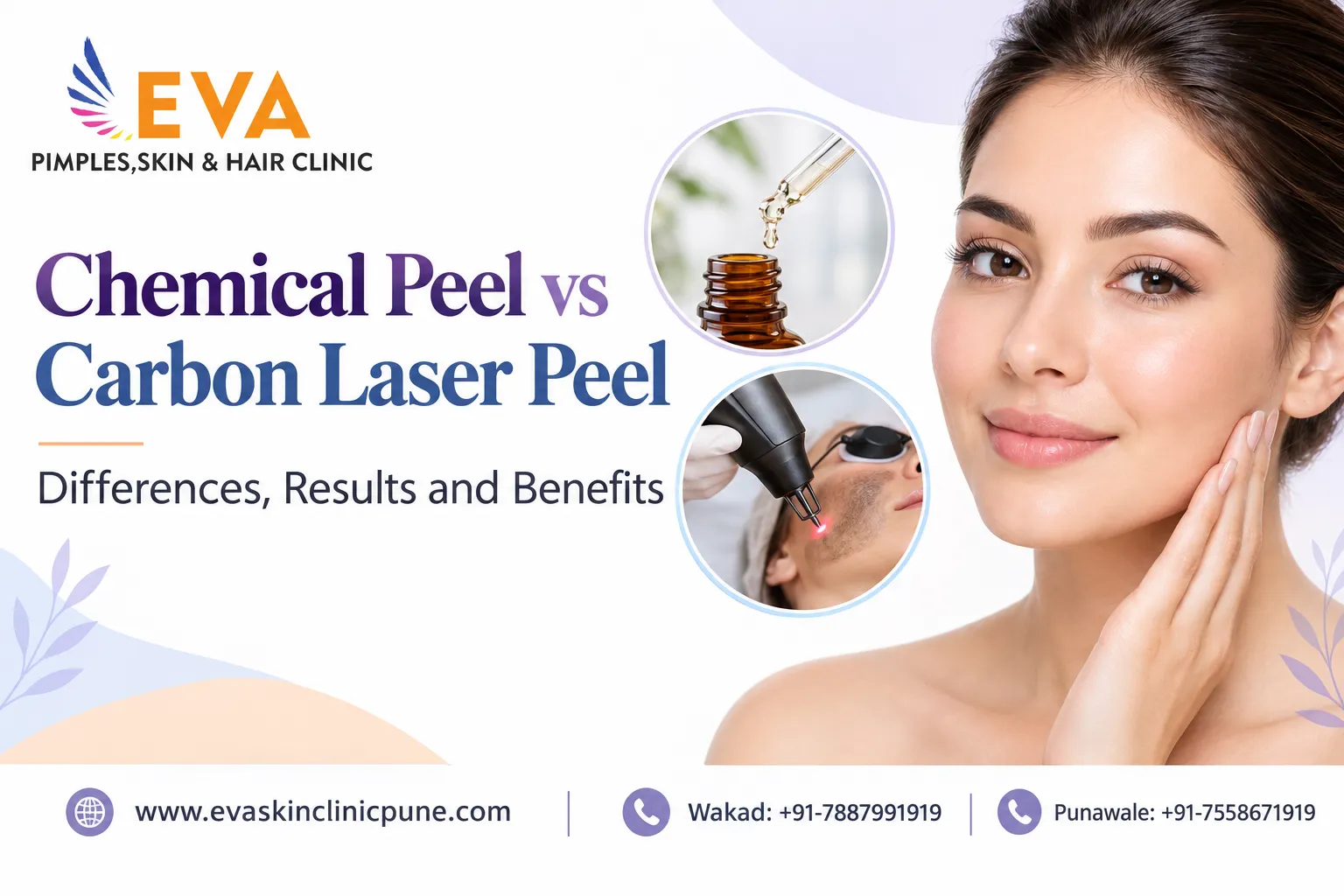

Chemical Peel vs Carbon Laser Peel | Differences, Results and Benefits
Home | Blogs | PRP for Female Pattern Hair Loss | PRP Hair Treatment | Eva Pimples Skin & Hair Clinic

Table of Contents
Dull skin, stubborn acne marks, and enlarged pores lead many people to look for a quick fix. Two names come up most: chemical peels and carbon laser peels.
They sound alike, but they work differently. This guide explains how each one works, who it suits, and what to ask before booking a chemical peel treatment.
Key Takeaways
- Chemical peel: uses an acid solution to exfoliate dead skin. It is commonly considered for pigmentation, uneven tone, texture, and acne marks.
- Carbon laser peel: uses carbon lotion plus laser energy to lift surface debris and oil. It is commonly considered for oily skin, open pores, and dullness.
- Downtime: chemical peels range from none to several days of peeling. Carbon peels usually involve little visible downtime.
- Sessions: both usually need a series of sessions, not one.
- Cost: no fixed price. It depends on peel type, number of sessions, area treated, and the doctor’s assessment.
- Right choice: depends on your skin concern, skin type, and medical history. A dermatologist should decide after examining you.
What Is a Chemical Peel?
A chemical peel is a dermatology procedure in which a controlled acid solution is applied to the skin. It loosens and removes the outer layers of dead cells. New, smoother skin forms underneath.
Peels are grouped by how deep they act:
- Superficial peels: glycolic, lactic, mandelic or low-strength salicylic acid. Mild flaking, little downtime. Related options include a Yellow Peel Treatment.
- Medium peels: typically trichloroacetic acid (TCA). They reach deeper layers and need more recovery time.
- Deep peels: reserved for specific conditions and done only under close medical supervision.
Most people seeking chemical peel treatment start with superficial to medium peels.
What a Chemical Peel May Help With
A dermatologist may suggest a peel for:
- Uneven skin tone and mild Skin Pigmentation Treatment
- Active acne and post-acne marks (see acne scar treatment)
- Rough texture and dullness
- Sun-related changes such as Tan Removal Treatment
These are commonly cited chemical peel benefits. Results vary from person to person.
What Is a Carbon Laser Peel?
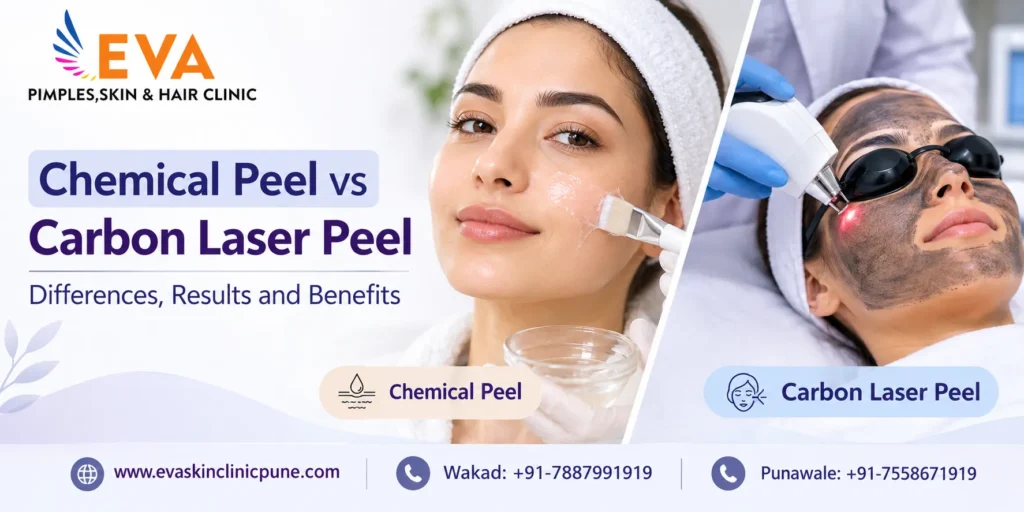
A carbon peel laser treatment is a two-step procedure.
First, a thin layer of carbon-based lotion is applied to the face. The carbon particles settle into pores and bind to surface debris and oil.
Next, a laser (commonly a Q-switched Nd:YAG laser) is passed over the skin. The carbon absorbs the laser energy, which helps break down the particles and lift away dead skin cells and impurities.
It is nicknamed the “Hollywood peel” or China doll peel.These are casual terms, not medical ones. At some clinics, a similar service is listed as a carbon facial.
What a Carbon Peel May Help With
- Oily skin and visibly open pores
- Dull or tired-looking skin
- Mild acne and blackheads
- Uneven texture
Most people describe a light tingling or warm snapping sensation. Comfort levels differ.
Chemical Peel vs Carbon Laser Peel: Key Differences
|
Factor |
Chemical Peel |
Carbon Laser Peel |
|
How it works |
Acid solution dissolves dead skin |
Carbon lotion plus laser energy clears surface debris |
|
Main focus |
Pigmentation, texture, acne marks |
Pores, oil, dullness |
|
Peeling after treatment |
Common, especially with medium peels |
Usually minimal |
|
Downtime |
None to several days |
Generally little to none |
|
Sessions |
Often a series |
Often a series |
|
Skin type considerations |
Depth must be chosen carefully |
Settings must match skin type |
|
Who performs it |
Dermatologist or supervised clinic team |
Dermatologist or supervised clinic team |
In short: a chemical peel exfoliates through acid. A carbon peel cleanses the surface through laser-assisted action. Neither is “better” for everyone. The right choice depends on your skin concern.
Results: What to Expect
After a Chemical Peel
Superficial peels may leave skin feeling smoother within a week or so. Some people notice light flaking for two to five days. Medium peels cause more visible peeling and take longer to settle.
Improvement in tone and marks usually builds over several sessions.
After a Carbon Laser Peel
Skin often looks fresher soon after a session, and some people notice a temporary glow. Changes in pore appearance and oil control, where they occur, usually develop over a course of treatments.
Important: no peel can promise a specific outcome. Skin type, age, lifestyle, sun exposure and aftercare all affect results.
Who Is Suitable for Which Treatment?
Only a qualified dermatologist can advise you after examining your skin. As a general guide:
A chemical peel may be considered if you have:
- Post-acne marks or mild pigmentation (including melasma, where the doctor must choose carefully)
- Uneven tone from sun exposure
- Rough or dull texture
A carbon laser peel may be considered if you have:
- Oily skin with visible pores
- Blackheads and mild congestion
- Dull skin and little time for recovery
A Note for Indian Skin Tones
Many people in India have medium to brown skin (Fitzpatrick types IV to V). This skin tends to develop post-inflammatory hyperpigmentation, meaning dark patches after irritation.
That is why peel strength, laser settings, and sun protection need careful planning. Aggressive treatment on the wrong skin type can worsen pigmentation.
Benefits of Chemical Peel and Carbon Peel
Chemical Peel Benefits
- Helps refine skin texture
- Can lighten the look of superficial pigmentation
- Supports acne management as part of a wider plan
- Available at different strengths
Carbon Peel Benefits
- Targets oil and pore appearance
- Short sessions with usually minimal downtime
- Suits people who want little visible peeling
- Often tolerated well on oily skin
Possible Side Effects and Risks
Every procedure has risks. Know them before you decide.
Chemical peels:
- Redness, stinging and dryness
- Flaking or peeling
- Temporary darkening or lightening of skin
- Rarely, scarring or infection, especially with deeper peels
Carbon laser peels:
- Mild redness and sensitivity
- Dryness
- Temporary pigment changes in some people
- Rarely, burns if settings or technique are wrong
Your dermatologist should explain these risks and answer your questions before starting.
Who Should Avoid These Treatments (or Wait)
Tell your doctor if you:
- Are pregnant or breastfeeding
- Have taken oral isotretinoin recently
- Have active infections, cold sores or open wounds on the face
- Have a tendency toward keloid scars
- Use strong retinoids, or have a fresh tan or sunburn
Chemical Peel Treatment Cost in Pune
People often ask about chemical peel treatment cost in Pune, chemical peel price and how it compares with carbon peel pricing. There is no single fixed figure. The cost depends on:
- Type and strength of the peel (superficial or medium)
- Number of sessions your skin needs
- Treatment area (face only, or neck and body too)
- Technology and products used
- Doctor’s assessment and aftercare plan
The same applies to a carbon peel, where session count and equipment influence the chemical peel cost comparison.
The most reliable approach is a consultation. A dermatologist can examine your skin, recommend a plan, and give you an itemised estimate. You can book an appointment to discuss this.
How to Prepare and Recover
-
Before treatment:
- Avoid waxing, threading and harsh scrubs for a few days
- Stop strong actives only if your doctor advises it
- Avoid tanning and direct sun
After treatment:
- Use a gentle cleanser and a plain moisturiser
- Apply broad-spectrum sunscreen daily, and reapply
- Do not pick at peeling skin
- Avoid heat, saunas and intense workouts for a day or two if advised
- Follow your dermatologist’s specific instructions
Sun protection is the single most important step. In Pune’s strong sun, skipping it can undo progress and trigger pigmentation.
Conclusion
A chemical peel uses acids to exfoliate and is often chosen for tone, texture and marks. A carbon laser peel uses carbon lotion and laser energy and is often chosen for oil, pores and dullness.
Both can help when matched to the right skin, but neither is a guaranteed fix. Skin type, sun protection, and a qualified dermatologist matter more than the treatment name.
If you are considering chemical peel treatment in Pune, start with a consultation instead of choosing a peel from a social media post.
Related Reading on Eva Skin Clinic Pune
FAQ
Neither is better for everyone. A carbon peel is often chosen for oil and pores. A chemical peel is often chosen for tone and marks. Your skin concern decides.
Most people feel stinging or warmth for a few minutes. Peel strength and skin sensitivity affect comfort.
It varies. Many plans involve a series spaced a few weeks apart. Your doctor sets the schedule after assessing your skin.
Superficial peels are often repeated every few weeks as part of a plan. Medium peels need longer gaps. Repeating too soon can irritate the skin, so follow your doctor’s schedule.
Safety depends on correct strength, correct laser settings, an experienced doctor and strict sun protection, not on the treatment name. Brown skin is more prone to dark patches after irritation, so a skin assessment comes first.
Carbon peels are more often chosen for oily skin and visible pores. Some peels, such as salicylic acid, can also help oily skin. A dermatologist can advise which suits your pores and oil level. Other options for pores include microdermabrasion and Hydrafacial.
Often yes, but timing matters. Strong sun increases the risk of pigmentation after a peel, so your doctor may adjust the peel strength or advise you to wait. Daily sunscreen is needed in every season.
Superficial peels are sometimes used for teenage acne, but only after a doctor’s assessment. Parents should not start peels based on online advice. See also teenage acne treatment.