
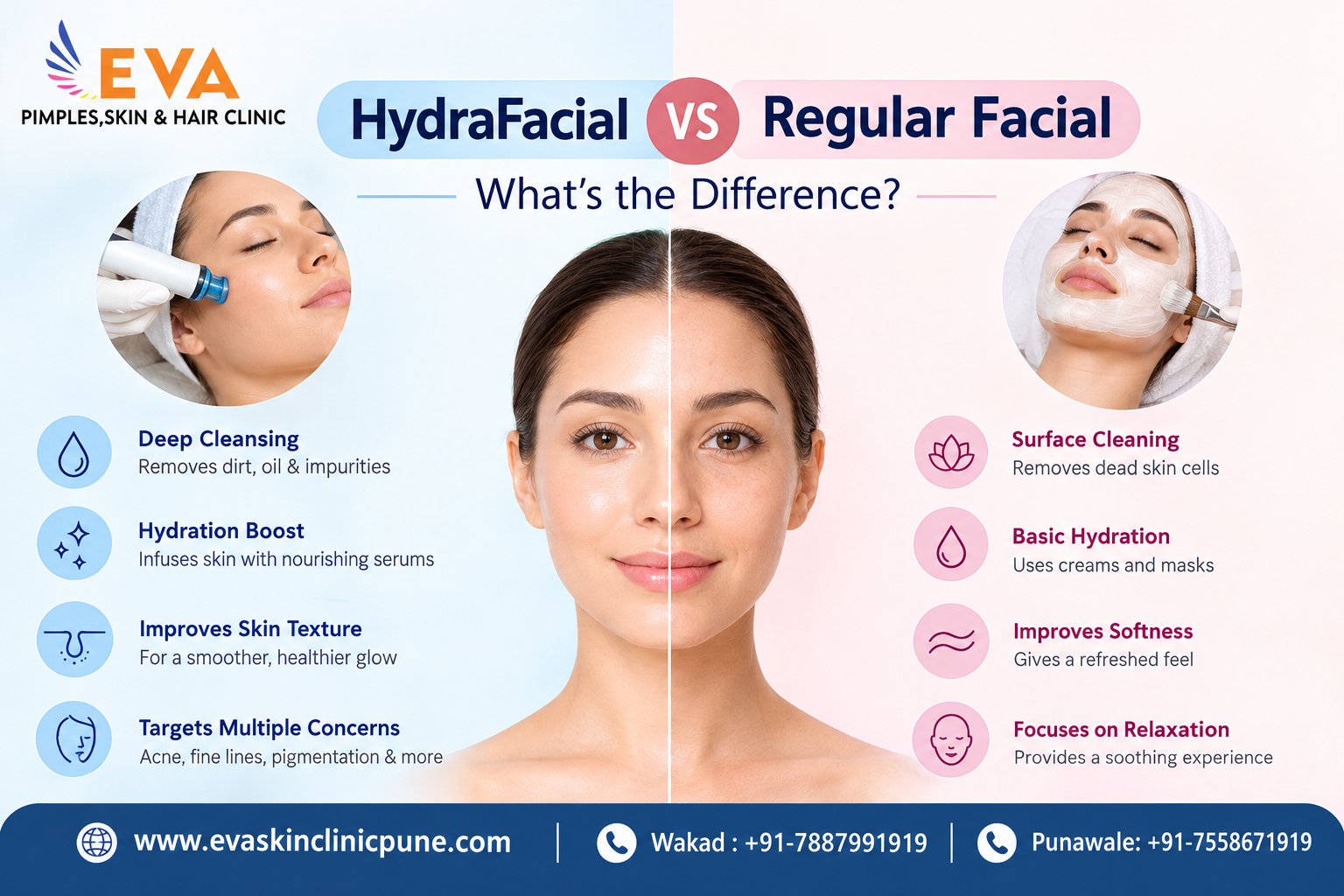

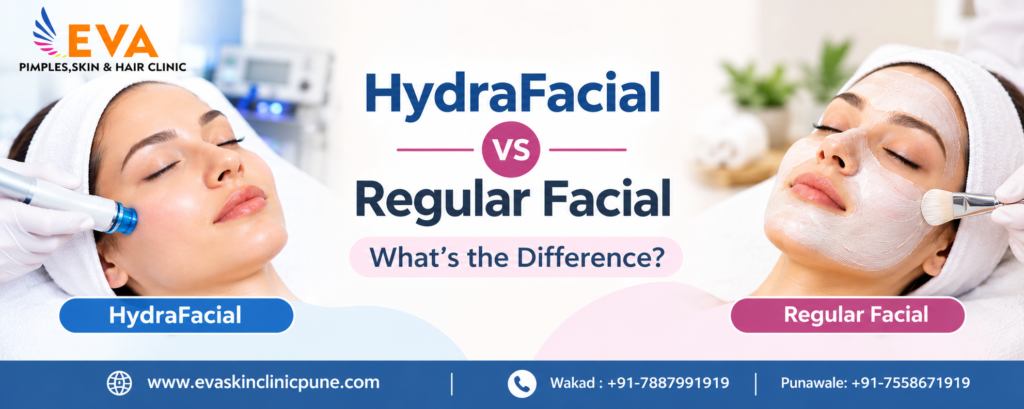
HydraFacial vs Regular Facial: What's the Difference?
Home | Blogs | PRP for Female Pattern Hair Loss | PRP Hair Treatment | Eva Pimples Skin & Hair Clinic

Table of Contents
You book a facial the week before a wedding. Your skin glows for two days, then the dullness creeps back. Sound familiar?
Now everyone is talking about HydraFacial, and the price tag makes you wonder whether it’s a real upgrade or just a fancier name. This guide breaks down both treatments, what each does, and which one suits your skin. You can also explore HydraFacial in Pune at Eva Skin Clinic if you want to see the treatment page first.
What Is a Regular Facial?
A regular facial is the classic salon or clinic treatment. A therapist works on your skin by hand, using creams, steam, masks, and massage.
A typical regular facial includes:
- Cleansing and toning
- Scrubbing or gentle exfoliation
- Steam
- Manual blackhead and whitehead removal
- Facial massage
- A mask, followed by moisturiser and sunscreen
It’s relaxing, and the massage alone can leave you feeling less tired. Results depend a lot on the products used and the therapist’s skill.
Is a Regular Facial Good for Your Skin?
Yes, for the right goals. A regular facial is good for basic cleansing, a temporary glow, and relaxation. It can also help skin feel softer and look fresher for a few days.
What it can’t do is change deeper concerns like pigmentation, stubborn acne marks or fine lines. For those, you need more targeted treatments such as skin pigmentation treatment or acne scar treatment.
Benefits of Regular Facial Treatment
- Removes surface dirt, oil, and dead skin
- Gives a short-term glow before events
- Relaxes facial muscles through massage
- Costs less than most clinic procedures
- Works well as a routine for people with fairly healthy skin
What Is a HydraFacial?
HydraFacial is a patented, device-based treatment. It uses a handheld tool with a spiral tip to cleanse, exfoliate, extract and infuse serums into the skin, all in one session.
Think of it as a facial with technology doing the heavy lifting. Most sessions take 30 to 45 minutes, and there’s usually no downtime.
At Eva, it sits under the clinic’s range of dermatologist-backed Medifacials, designed for specific skin concerns. See the full HydraFacial treatment.
The 3 Core Steps of a HydraFacial
- Cleanse and peel. A mild acid solution, often glycolic or salicylic acid, loosens dead skin and surface buildup.
- Extract. Gentle suction clears out congested pores and blackheads. It’s far less pressure than manual squeezing.
- Hydrate and protect. Serums with ingredients like hyaluronic acid and antioxidants are infused into the freshly cleaned skin.
Many clinics also offer booster add-ons for pigmentation, dullness or fine lines.
HydraFacial vs Regular Facial: Side-by-Side Comparison
|
Feature |
HydraFacial |
Regular Facial |
|
Method |
Device-based, vortex suction and serum infusion |
Manual, hands and products |
|
Time |
30 to 45 minutes |
45 to 90 minutes |
|
Pore cleaning |
Suction extraction, gentler |
Manual extraction, can cause redness |
|
Hydration |
Serum infused during the session |
Mask and cream applied on top |
|
Results |
Visible glow, often immediate |
Temporary glow |
|
Downtime |
Usually none |
Usually none, mild redness possible |
|
Customisation |
Boosters for specific concerns |
Depends on products and therapist |
|
Cost |
Higher |
Lower |
|
Best for |
Dull skin, clogged pores, dehydration |
Basic cleanup, relaxation |
Key Differences You Should Know
1. Technology vs. Touch
A regular facial depends on the therapist’s hands. HydraFacial uses a standardised device, so the process is more consistent from one session to the next.
2. Depth of Cleansing
Manual extractions can irritate sensitive skin. HydraFacial’s suction is gentler, which is why many people with oily or congested skin prefer it. If your main issue is breakouts, check the clinic’s acne and pimple treatment page too.
3. Hydration
Most regular facials hydrate on the surface. HydraFacial pushes serums in right after exfoliation, when skin is best able to absorb them.
4. Targeted Concerns
With boosters, a HydraFacial can be adjusted for dullness, uneven tone, or dehydration. A standard facial offers less room for that.
5. Relaxation
Here, the regular facial wins. If you want a long massage and an hour of pampering, it delivers that better.
HydraFacial Cost in Pune
Pricing varies by clinic, the technician’s experience, and which boosters you add. As a rough guide, a single HydraFacial session in Pune often falls between ₹4,000 and ₹9,000, while a regular facial can cost anywhere from ₹800 to ₹3,000.
Prices change, so confirm the current rate with the clinic before booking. You can book an appointment or contact the clinic for current pricing. Ask what’s included, such as boosters, consultation and aftercare.
What affects the cost:
- Clinic location and setup
- Type of booster (pigmentation and anti-ageing boosters cost more)
- Whether a dermatologist or trained technician performs it
- Package deals for multiple sessions
A cheaper price isn’t always better value. Check that the clinic uses genuine HydraFacial devices and fresh disposable tips for every client.
Who Should Choose a HydraFacial?
A HydraFacial may suit you if you have:
- Dull, tired-looking skin
- Clogged pores or frequent blackheads
- Dehydrated or uneven skin texture
- Mild pigmentation or early fine lines
- An upcoming event and no time for recovery
Who Should Stick to a Regular Facial?
A regular facial may be the better pick if:
- Your skin is generally healthy, and you want a basic refresh
- Your budget is tight
- You mainly want relaxation
- You’ll enjoy massage-based treatments
Who Should Skip or Delay a HydraFacial?
Not everyone is a good candidate right away. Talk to a dermatologist first if you:
- Have active, inflamed acne or open wounds
- Have a sunburn or recent peel
- Are using isotretinoin or strong retinoids
- Have rosacea or very reactive skin
- Are pregnant (some serums and acids may not be advised)
What to Expect After a HydraFacial
Most people leave with fresh, plump-looking skin. Mild pinkness can appear and usually settles within a few hours.
Aftercare basics:
- Use sunscreen daily, especially in Pune’s sun
- Skip harsh scrubs and strong actives for a day or two
- Drink enough water
- Avoid heavy makeup right after, if you can
For lasting results, many skin professionals suggest repeating the treatment about once a month. Your skin type and goals decide the right gap.
Other Facial Options Worth Knowing
If neither facial feels like the right match, these clinic treatments target more specific needs:
- Carbon Facial for oily skin and large pores
- Vampire Facial for skin rejuvenation using your own PRP
- Korean Glass Skin Facial for a smooth, luminous finish
- Teenage Clarifying Facial for younger, acne-prone skin
- Pumpkin Peel Facial for gentle exfoliation and brightness
- Microdermabrasion for dull, rough skin
- BB Glow Treatment for uneven tone and tired-looking skin
Best Facial in Pune: How to Choose
Whichever treatment you pick, the clinic matters as much as the facial itself. Look for:
- Qualified practitioners. A dermatologist or trained skin professional.
- Hygiene. Single-use tips and sterilised tools.
- Honest consultation. They should assess your skin, not push the priciest package.
- Real reviews. Check Google reviews and before-and-after photos with context. Eva shares acne treatment results on its site.
- Clear pricing. No surprise add-ons at the counter.
More From Eva Pimples Skin & Hair Clinic
Conclusion
A regular facial is a solid, affordable way to cleanse, relax and freshen up. A HydraFacial goes further, combining exfoliation, extraction and hydration in one quick session.
Pick a regular facial for basic care and relaxation. Pick HydraFacial for clogged pores, dullness and dehydration, if it fits your budget.
If you’re unsure, a short consultation with a skin professional will point you to the right choice. Ready to try it? Book your HydraFacial in Pune at Eva Pimples Skin & Hair Clinic
FAQ
For deep pore cleansing and hydration, usually yes. For relaxation and a lower price, a regular facial can be the better fit.
Most people feel a mild tingling or suction. It’s generally more comfortable than manual extraction.
Pricing depends on the clinic, the boosters you choose and whether you buy a package. A single session often falls in the ₹4,000 to ₹9,000 range, but confirm the current rate at the clinic. You can check HydraFacial in Pune at Eva Skin Clinic or book an appointment to get an exact quote.
Yes, for basic cleansing, a short-term glow and relaxation. It won’t treat deeper concerns like pigmentation, acne scars or fine lines. For those, a dermatologist-led treatment works better.
Many skin professionals suggest a facial roughly once a month, which matches the skin’s renewal cycle. The right gap depends on your skin type, so ask your dermatologist.
Mild, non-inflamed acne and clogged pores often respond well. If you have active, painful or cystic breakouts, see a dermatologist first, because other treatments may suit you better. Eva’s acne and pimple treatment page explains the options.
Check three things: who performs it (a dermatologist or trained professional), how clean the setup is (single-use tips, sterilised tools), and whether they assess your skin before suggesting a package. Honest pricing and real patient results also matter.
Often yes. The extraction step suits oily and congested skin well.